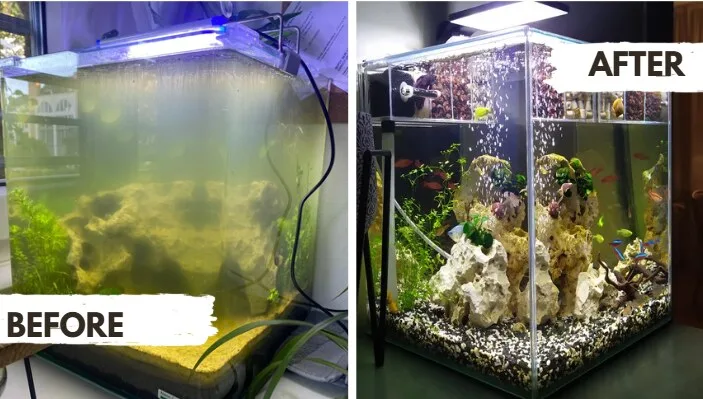
After a long, productive day of work, you finally come around to check on your new aquarium with your small fish friends and are alarmed to see that the water looks milky. At least once or twice, every hobbyist has experienced this frustrating situation where their aquarium water suddenly becomes cloudy.
When your aquarium is cloudy or foggy, light cannot penetrate the water properly. This blocks essential light from reaching your aquarium plants or corals and, in the most severe cases, reduces the amount of dissolved oxygen available, which can lead to the suffocation of fish and other aquatic animals.
Why Your Aquarium Water Is Cloudy
There are several possible reasons, but the most common culprits include bacterial blooms, particulate matter, and algal blooms. These issues often arise during the nitrogen cycle, especially in new tanks.
Before you decide how to clear up the cloudiness, you need to understand what is causing it. A variety of free-floating bacteria and other microbes take advantage of the minerals and nutrients in the water and begin to multiply rapidly, which leads to the cloudiness. The problem can become worse when hobbyists add too many fish at once or feed excessively, giving these microbes even more nutrients to thrive on.
By the time you finish reading this guide, you will be equipped with practical tips to tackle cloudy aquarium water and prevent it from happening again.
So now let’s go back to the beginning. What are the leading causes of cloudy aquarium water? Identifying the root cause is the first step to fixing the problem for good.
What Are The 7 Causes Of Cloudy Aquarium Water?
(1) Insufficiently Washed Gravel
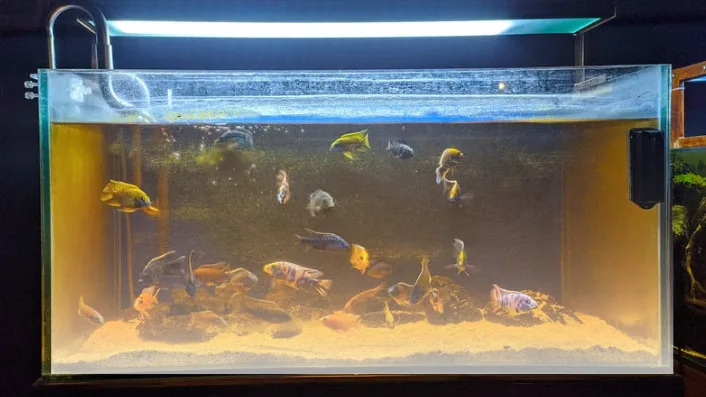
If you have just set up your tank and the water appears cloudy immediately or within a couple of hours, the cause is the substrate, aka the material on the floor of your tank.
Unless you have purchased a substrate that specifically says not to rinse it due to the presence of live, cultured bacteria that help cycle your tank (such as Activ-Flora or Eco-Complete by CaribSea), then you need to thoroughly rinse your gravel and/or sand to get rid of silt before adding it to your tank.
If you haven’t rinsed the substrate enough, it will make your tank water extremely cloudy due to all the silt particles still present.
How To Clear Cloudy Water Caused By Insufficiently Washed Gravel
First, you need to drain your aquarium water, but still leave a little so that your fish are comfortable. The goal here is to carefully take out your gravel. This process can be done manually, where you use your hands, or you use a gravel vacuum.
Once that is done, you wash the aquarium gravel you have taken out thoroughly. You should do this under running water or in a large bowl. Do this until the water is clear, even when you put the gravel in it. Now you can return the gravel to the aquarium. After that, you refill your aquarium with water. If you still notice some debris or particles, you can then use a filter to clean the rest out, and you are good to go.
(2) Bacterial Bloom
When there are more nutrients in the water than the existing beneficial bacteria can consume, the bacterial colony responds by rapidly multiplying. This sudden surge in bacteria density gives the water a milky appearance.
To understand bacterial blooms, you first need to understand bacteria’s role in keeping a healthy aquarium. Two primary types of bacteria are essential to fish tanks: Nitrosomonas species and Nitrobacter species. Both are needed to drive the nitrogen cycle, which breaks down waste within the tank, including fish excrement, uneaten or excess food, decaying plant matter, and dead aquarium inhabitants.
As waste material decomposes, it generates ammonia, which is highly toxic to fish and can lead to fin damage, irritated gills, swollen eyes, loss of appetite, sluggishness, and, ultimately, death. Beneficial bacteria like Nitrosomonas and Nitrobacter convert ammonia into less toxic nitrites. Then, other types of nitrifying bacteria convert the nitrites into nitrates, which are much less toxic.
When beneficial bacteria multiply in your tank, it can give the water a cloudy appearance. Bacterial blooms commonly occur when an aquarium is first set up, or a large number of fish are suddenly introduced (this is frequently referred to as “new tank syndrome”). A large portion of the beneficial bacteria is removed or killed, such as through excessive cleaning of the filter media (particularly if it hasn’t been serviced for quite a while) or from the use of certain medications that kill good bacteria.
The tank is experiencing an increase in waste material, for example, due to overfeeding or decaying plants.
How To Fix A Bacterial Bloom That’s Causing Cloudiness In Aquarium Water
A bacterial bloom in your aquarium takes more than a few minutes of deep cleaning. This is something you always have to watch out for. One way to fix this fast is to add activated carbon media or activated carbon pads to the filter, which will clear the water and adsorb nutrients that feed the bacterial bloom.
But first, you have to know what is causing the bacteria to bloom. Sometimes this bacterial bloom, which causes cloudy water in an aquarium, clears up on its own within a week or two as the beneficial bacteria colonies re-establish themselves.
But to speed up this process, you should try to remove debris, vacuum the gravel, excess waste from fish, and do partial water changes to reduce excess nutrients.
(3) Algae Bloom
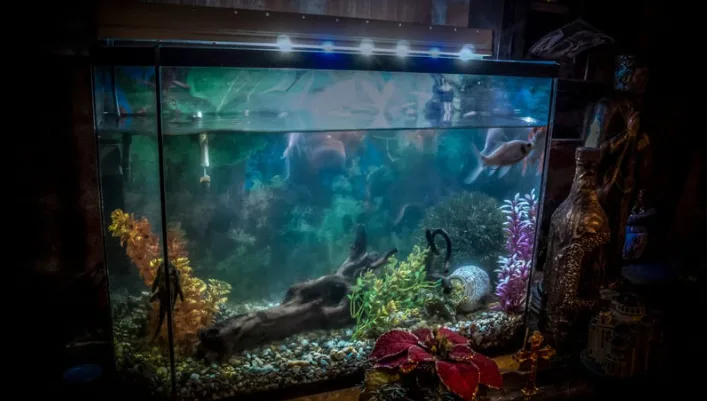
If your water is not only cloudy but also green, you have an algae bloom on your hands. Green water is generally a result of too much light (often direct sunlight) paired with excess fish food and fish waste. If your tank is densely stocked and water changes are not done frequently, the nitrates will be elevated, promoting algae growth. If your tank is near a window and gets lots of natural light, this will also contribute significantly to algae growth, because algae require light to photosynthesize.
How To Fix An Algae Bloom In Your Aquarium Water
To fix an algae bloom, change 25-30% of the water with fresh, dechlorinated water every few days to reduce nutrients. Turn off the tank light for up to 3 days and avoid direct sunlight. Clean the filter and add a UV steriliser to kill floating algae. You can add other live plants to compete for aquarium nutrients, algae-eating fish or snails, and shrimps that are suitable for your aquarium. Try not to overfeed and remove uneaten food. Use a gravel vacuum to clear debris. Gently scrape algae off glass and décor. Be consistent, fixing algae takes time, care, and good tank hygiene.
(4) Overfeeding
This is often one of the most overlooked causes of cloudy aquarium water. If you’re not paying close attention, it is easy to give your fish more food than they can eat within a few minutes. What happens? The leftover fish food sinks to the bottom, where it begins to decompose and release waste products like ammonia and nitrites. These waste compounds not only pollute the water but also feed bacterial blooms, which turn the water cloudy and can be harmful to fish.
Even worse is that cloudiness from overfeeding often comes with a foul or musty smell that can give your whole apartment a damp, moldy, foul smell. This may be accompanied by increased algae growth or stressed fish. It’s especially common among new hobbyists who believe feeding more means showing more love and care to their fish.
How To Fix Aquarium Water Cloudiness When Caused By Overfeeding
The first step to fix this, reduce feeding to once or twice a day and offer only what your fish can consume in 2–3 minutes. In the case that there are leftovers, remove any uneaten food promptly and consider skipping a feeding day once a week to allow your tank to reset. Over time, this small adjustment can greatly improve water clarity and overall tank health. Remember, in aquariums, less is often more, especially when it comes to food.
(5) Poor Filtration
Poor filtration is one of the leading causes of cloudy aquarium water, especially when the aquarium starts accumulating waste faster than the filter can remove it.
Particularly when leftover fish food, waste, and other debris are left to float around, they begin to break down and release harmful substances like ammonia. These waste compounds fuel bacterial blooms, which can give the water a cloudy, milky appearance. And without a proper filtration system in place, this cloudiness only gets worse.
A lot of hobbyists think any filter will do, but not all filtration systems are created equal. Mechanical filters may remove visible particles, but they don’t address the chemical and biological waste in the tank.
This is where biological filtration becomes crucial. Bio-filters are designed to house beneficial bacteria that help break down toxic ammonia and nitrites into less harmful nitrates. These bacteria colonize filter media like sponges, ceramic rings, and bio-balls, forming a natural and efficient waste management system for your aquarium.
Without this biological process in place, your tank’s water chemistry can quickly become unstable, even if the water looks clear on the surface. That’s why every aquarium, especially those with multiple fish or live plants, should include a biological filter as part of its setup.
How To Fix Water Cloudiness Caused By Poor Filtration
It is important for you and great for your aquarium if you maintain a healthy and effective filtration system, clean your filter media regularly, but not with tap water, as chlorine can kill the beneficial bacteria. Instead, rinse filter parts gently using water from the tank during routine water changes. Also, make sure your filter is rated for your tank size and consider upgrading if you notice persistent cloudiness or foul odors.
(6) Overstocking
Overstocking is one of the biggest mistakes new and even experienced aquarium hobbyists make. It’s when there are too many fish in the tank relative to its size, filtration, and oxygen. Think of it like putting too many people in a room.
It’s tempting to fill your tank with lots of colorful fish, but an overstocked tank becomes a breeding ground for bacteria, waste, which leads to cloudy water, stressed fish, and unstable water parameters.
Each fish produces waste through respiration and digestion. The more fish you have, the more ammonia and organic waste are released into the water. When your filtration system can’t keep up, this leads to an increase in bad stuff and nutrient overload. In response, bacterial blooms may develop, the water becomes milky, and visibility reduces. Oxygen levels can also drop, especially at night, putting further stress on fish and beneficial bacteria.
Overstocking can also lead to increased aggression, competition for food, and higher disease risk due to poor water quality.
How To Fix Aquarium Water Cloudiness When Caused By Overstocking
To avoid this, follow the general rule of thumb: one inch of fish per gallon of water, although this varies depending on species, tank setup, and filtration. Always research the adult size and space needs of each fish before adding it to your tank.
If your tank is already overstocked, consider rehoming some fish, upgrading to a larger tank, or enhancing your filtration system to handle the higher bio-load. Remembering to give your fish enough space not only keeps the water clearer but also creates a healthier, more peaceful environment. A balanced tank is easier to maintain and more enjoyable to watch. When it comes to stocking your aquarium, quality always beats quantity.
(7) Chemical Imbalance
A chemical imbalance in your aquarium can lead to cloudy water, stressed fish, and an unstable ecosystem.
This is the trickiest of all, unlike debris you can see or algae you can scrub off, chemical issues are invisible until your water turns murky or your fish start acting strangely.
The most common culprits are spikes in ammonia, nitrites, and nitrates, and sudden changes in pH levels. These can happen for many reasons: overfeeding, decaying plants, insufficient filtration, or even using untreated tap water. When these chemicals build up, they stress the fish and promote bacterial blooms, which cloud the water and disrupt the biological balance. A balanced tank relies on the nitrogen cycle, where beneficial bacteria convert ammonia into nitrites and then into nitrates. If this cycle is broken or overloaded, you’ll get cloudy water and unstable water parameters.
How To Fix Aquarium Chemical Imbalances
You can fix chemical imbalances by doing a few things: test your water regularly using aquarium test kits. Test ammonia, nitrite, nitrate, and pH weekly, especially after adding new fish, changing water, or adjusting feeding. Do partial water changes (20-30%) weekly to dilute excess nutrients and balance. Always use a water conditioner to neutralize chlorine and chloramine when adding fresh tap water.
Also, avoid sudden or big water changes that can shock your tank’s ecosystem. If you’re seeing cloudiness or struggling with chemical spikes, consider adding live plants, which absorb nitrates and help regulate water chemistry naturally.
Does Baking Soda Help Cloudy Water?
A bit tricky, but the answer is not exactly.
Baking soda (sodium bicarbonate) is sometimes used in aquariums to raise the pH and increase carbonate hardness (KH) of the water, especially in freshwater setups where the water is too soft or acidic. While adjusting pH can be part of creating a stable environment, baking soda doesn’t actually “clear” cloudy water or remove the particles or bacteria causing it.
Using baking soda without understanding your tank’s current water chemistry can do more harm than good. Sudden changes in pH or KH can shock your fish and destabilize the nitrogen cycle, possibly making the cloudiness worse.
As explained earlier, while several factors can lead to cloudy aquarium water, bacterial blooms, often fueled by leftover food, unclean gravel, and poor water conditions, are usually the main culprit. Paying close attention to these areas is important, as even small oversights can disrupt the balance of your tank. With consistent care and maintenance, you can create a clean, healthy environment where your fish can swim without stress or illnesses.
FAQs On Aquarium Water Cloudiness
(1) How Long Does It Take For Cloudy Aquarium Water To Clear?
Typically, if your cloudy aquarium is caused by a bacterial bloom, if left on its own, it should take about 7 to 14 days to clear up. But you might not want to take that chance. Also, it depends on the cause. If caused by dirt, waste, or uneaten food, it may take up to a week with regular cleaning, proper filtration, and water changes. Using a water conditioner and reducing feeding can help speed up the process.
(2) Why Won’t My Fish Tank’s Cloudy Water Go Away After Cleaning?
Cloudy aquarium water can recur if there are other causes that you are not aware of. A bacterial bloom is simply healthy bacteria reproducing sporadically. Water can return after cleaning if the root problem isn’t fixed. Overfeeding, poor filtration, dirty gravel, or high levels of nutrients like ammonia and nitrates can keep the water cloudy. Sometimes cleaning too much at once removes good bacteria, upsetting the tank’s balance. Check your filter, feeding habits, and test your water. Make sure you’re not doing large water changes that shock the tank.
(3) Is Cloudy Water Bad For Fish?
In most cases, no, not directly. But it could be a sign of more serious problems that can harm your fish. While the cloudiness itself (bacterial or algal blooms) is not toxic, it can mean poor water quality (high ammonia, nitrite, or nitrate) or too much organic matter.
(4) Can I Use Chemicals To Clear Cloudy Aquarium Water?
Yes, there are water clarifiers that bind small particles so your filter can remove them. But these are temporary fixes. It’s better to find and fix the root problem, like overfeeding, dirty gravel, or weak filtration.
(5) Should I Do A Full Water Change To Clear Cloudy Water?
No. Changing all the water at once can destabilize your fish and remove beneficial bacteria. Do partial water changes (25-30%) every few days instead. This keeps your aquarium stable while slowly improving water quality over time.
(6) Can Tap Water Cause Cloudiness?
Yes, it can. Tap water with high minerals (hard water) can look cloudy when added to the tank. This usually settles after a few hours. Always use a water conditioner to remove chlorine and heavy metals before adding tap water. You can’t be too careful.
(7) Why Is My Tank Still Cloudy With A Filter?
There are many likely causes, but the most common could be that your filter may be too small, dirty, or not working properly. Make sure it’s the right size for your aquarium and clean the filter media regularly. You can also add a fine filter pad or a water polishing pad to catch small particles.