



Airline & Fittings
Showing all 3 results
-
2 Options
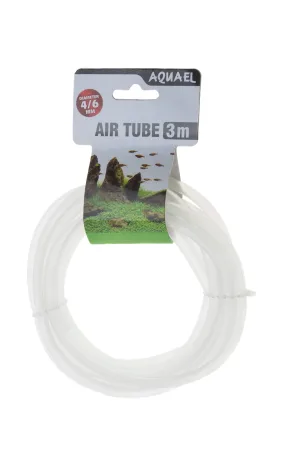
AquaEL Airline
Price range: 1.37 € through 2.63 € Select options This product has multiple variants. The options may be chosen on the product page -
-
Showing all 3 results
Shop Reliable Aquarium Airline Fittings
Aquarium airline fittings are the connectors that enable your tank to be aerated properly and efficiently. These small but vital components provide for the oxygenation of your fish while still ensuring water circulation. From simple airline tubing to more specialised connectors, these fittings are very much essential to any thriving aquatic environment.
Airline tubing connects your air pump to diffusers and stones, and connectors are used to connect two sections. Check valves stop the water from flowing back into the pump, which can damage it, and T-connectors and Y-connectors are fittings that allow you to split the air flow out to various devices. The AquaEL Airline is a standard, reliable option for connecting air devices in many aquarium systems, while the OASE Hose OxyMax is designed for oxygen-optimized configurations and works best with demanding setups.
Aquarium airline fittings should be plastic or metal and of the appropriate size for your tubing diameter, which is usually the standard 4/6 mm. Check valves are especially important to prevent backflow, which may be harmful to your air pump. If you have larger tanks or systems with multiple outputs, choose manifolds with adjustable valves to control them individually.
For optimal performance, do not mix tubing of different sizes or force ill-fitting parts, as this may result in leaks. Install check valves on every air pump installation, and particularly for those that are below tank level. To keep the tank tidy, secure the tubing to the glass with suction clips to prevent it from getting tangled. You should also be sure to regularly inspect your fittings for clogs or wear.
Aquarium airline fittings are simple and effective ways to increase water movement, oxygenation, and fish tank health. Browse our selection of connectors, valves, and tubing accessories to personalize your airflow system and make sure everything is functioning safely and smoothly.
Frequently Asked Questions
(1) What size is standard aquarium airline tubing?
The normal aquarium airline tubing comes in 4mm inner diameter (ID) and a 6mm outer diameter (OD), commonly stated as 4/6mm. This is the usual size, and it should suit most air pumps and attachments. OASE Hose OxyMax 4/6mm follows this standard size for compatibility.
(2) What is aquarium airline tubing made of?
Quality airline tubing is made of silicone or flexible PVC that’s safe and non-toxic for fish. The materials resist kinking, stay flexible with age, and won’t leach harmful chemicals into your tank. Avoid cheap rubber tubing that can become brittle or emit toxins.
(3) How to connect airline tubing to pumps?
Push the tubing over the air pump barb outlet until firmly fixed. Use airline connector aquarium fittings if you need coupling sections in combination or splitting airflow. To get a good seal, warm the tubing end slightly in your hands before joining – this softens it.
(4) What is a check valve used for in an aquarium?
A check valve for an aquarium airline prevents water from entering your air pump in case of loss of power or pump suction loss. This one-way valve prevents your equipment from getting wet and offers normal airflow continuously. Mount it always between the tank and pump with the arrow pointing toward the tank.
(5) Can I use airline tubing for CO2?
Standard airline tubing is not recommended for CO2 systems. CO2 requires special tubing that’s CO2-resistant and at the proper pressure. Using standard airline tubing for CO2 causes leaks and inconsistent dosing that harms your fish and plants.
(6) What type of tubing is safe for an aquarium?
Only use tubing that is noted as aquarium-safe or food-grade. Avoid using hardware store tubing, which may have plasticizers or chemicals that are fish toxic. High-quality airline fittings from reputable brands like AquaEL and OASE are aquarium tested and won’t affect water chemistry.
(7) How do I know if my fish tank has enough oxygen?
An easy way to detect low oxygen levels in your aquarium is when you see the fish gasping at the water’s surface, prolonged hours of inactivity, or hanging in clumps around the filter outflow. Proper aeration can be done using an air pump, tubing, and diffusers to create surface agitation that optimizes oxygen exchange. If fish seem stressed or inactive, adding aeration generally remedies the situation immediately.