5 Principles for a Thriving Aquarium (The 2Hr Aquarist)
Every aquascaper knows that special feeling of excitement and nervousness when looking at an empty glass tank. It is a blank slate, a canvas, a vessel, a box, or a container, if you will, waiting to be turned into a living, breathing, thriving aquarium. However, the journey from an empty box to a thriving, algae-free paradise is often a chemistry war and a delicate balancing act.
This is the story of the evolution of a planted tank, from the very first speck of soil to the pinnacle of maturation, and how we navigated the intricate stages of growth with the precision tools of The 2Hr Aquarist.
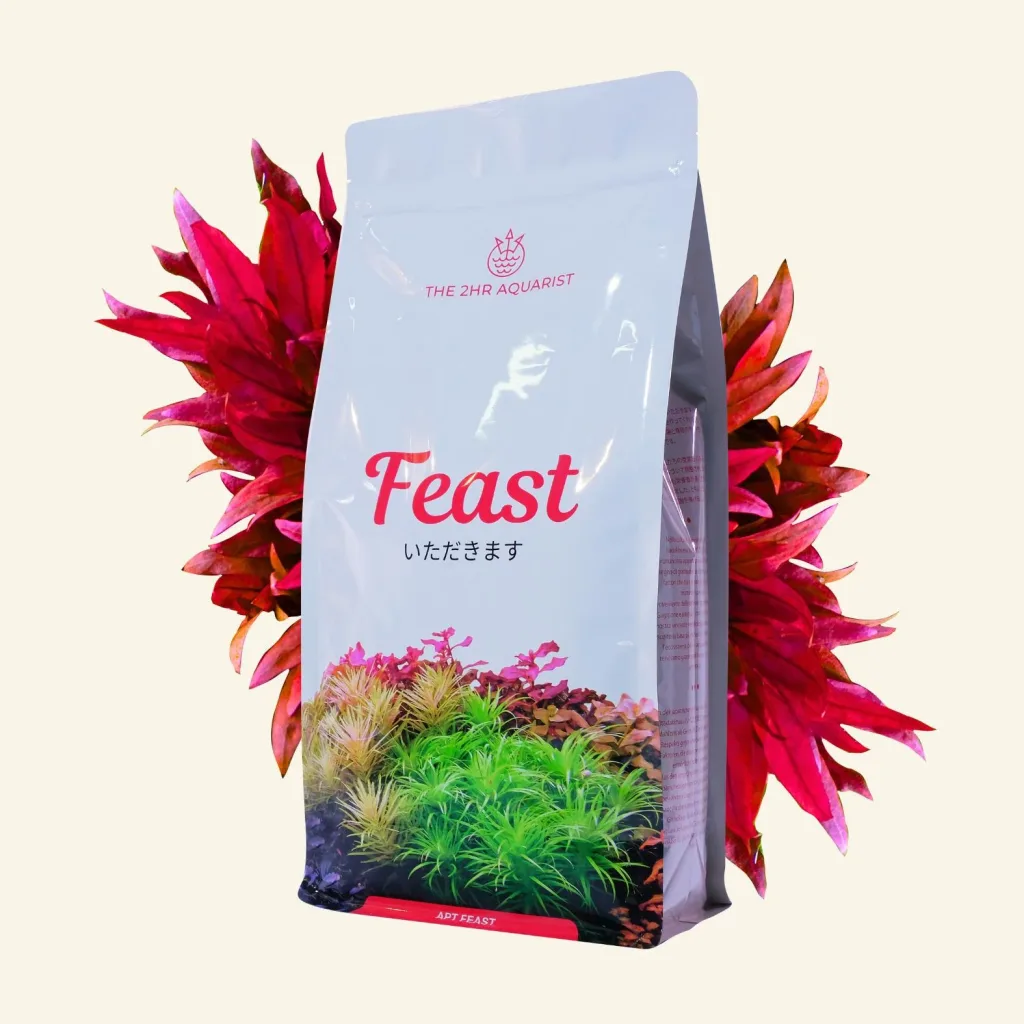
Great stories, like great buildings, require a solid foundation. In the aquascaping world, the “ground floor” dictates the long-term health of the system. We didn’t want just inert gravel; we needed a reservoir of energy.
We began with APT Feast. Unlike generic soils that often leach ammonia uncontrollably, causing early algae blooms, this substrate felt different. It is designed to be nutrient-dense but chemically stable. By banking the nutrients in the soil rather than flooding the water column immediately, we gave the roots a rich larder to tap into without polluting the open water. This “rich soil, lean water” approach is the cornerstone of the 2Hr philosophy.
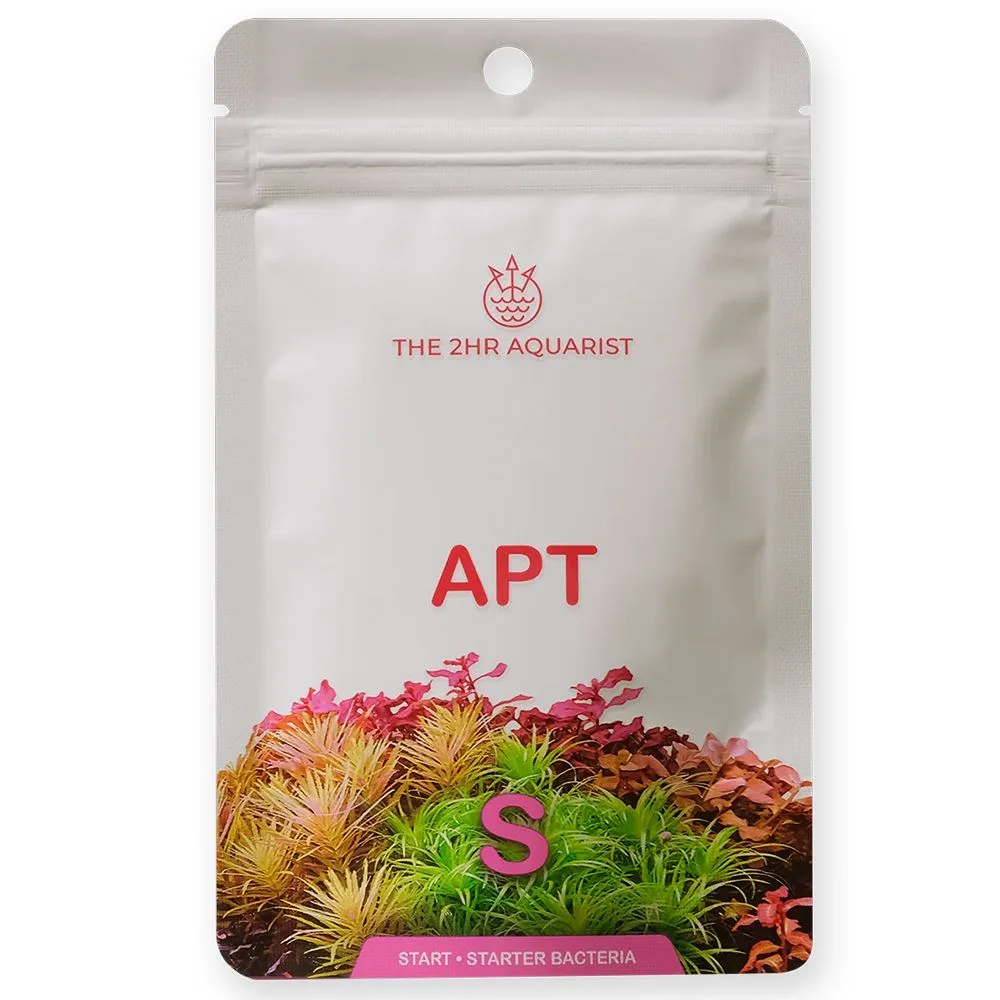
With the hardscape set and the tank flooded, the water was clear, yet biologically dead. The “New Tank Syndrome” is where many aquarists lose hope, plagued by melting plants and cloudy water.
To bridge the gap between a sterile container and a living ecosystem, we introduced APT Start. This wasn’t just about dumping in generic bacteria; it was about establishing a specific microbiome. APT Start kickstarted the nitrogen cycle, turning the tank into a safe haven for future livestock. It acted as the invisible workforce, processing waste and stabilising the water parameters while the plants were still in shock from being planted.
This is the most critical chapter in the story. The plants are transitioning. They are rooting down, repairing tissue, and adapting to submerged life. They are not yet ready to consume massive amounts of nutrients.
If we had poured in heavy fertilisers now, the plants wouldn’t have used them, but the algae would.
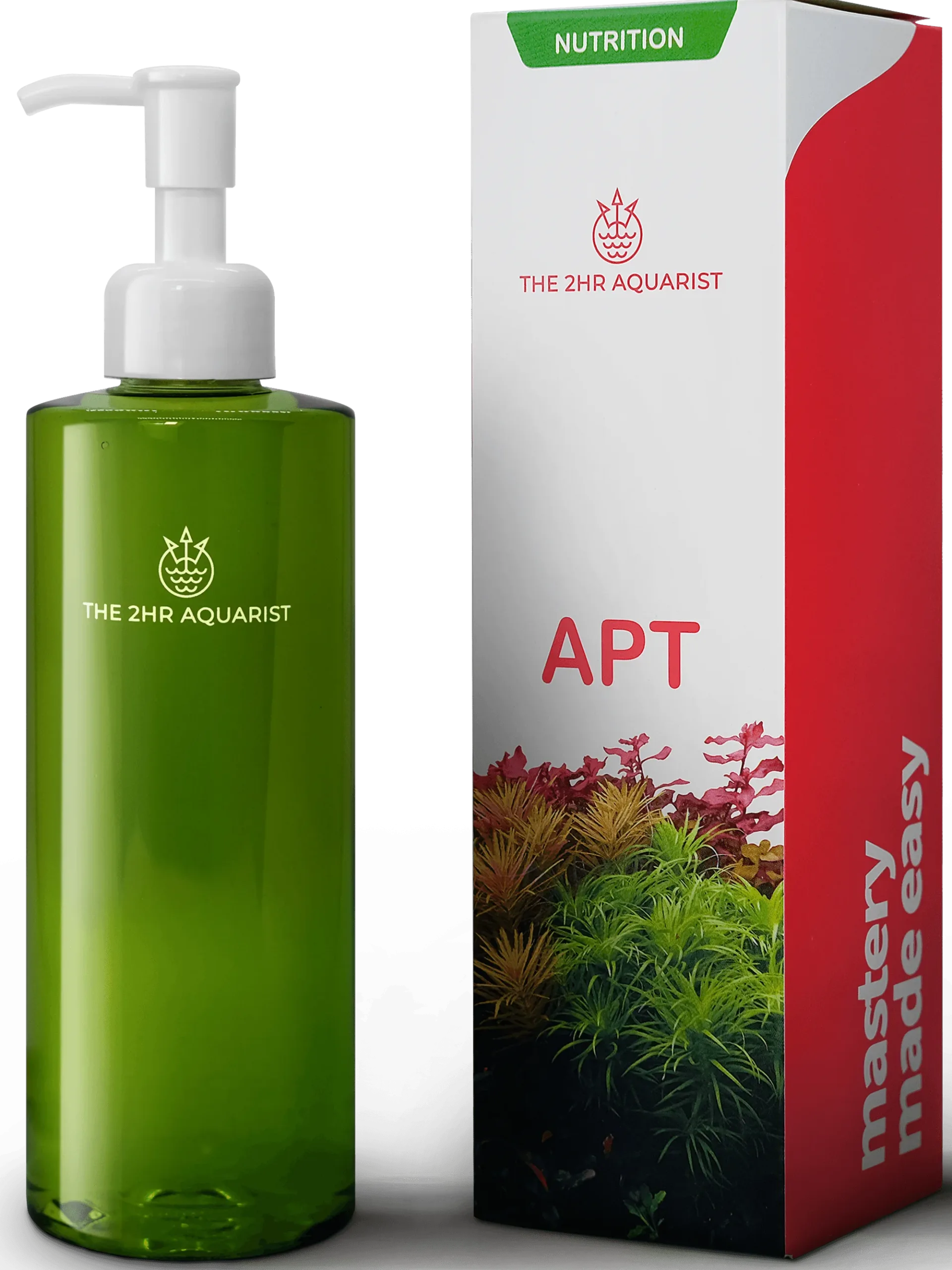
We opted for APT 1 (formerly APT Zero) during this delicate phase. APT 1 provides comprehensive micro-nutrients but removes the nitrates and phosphates. Why? Because with a new, nutrient-rich APT Feast, the roots already have access to nitrogen and phosphorus. By keeping the water column “lean” (free of heavy nitrates), we starved out potential algae spores while the plants drank their fill from the soil. This strategy allowed us to achieve those deep, intense reds in our stem plants right from the start.
By the third month, the narrative shifted. The tank was established. The plant mass had tripled, and the roots had colonised the entire substrate. The ecosystem was hungry. The lean days were over; it was time to accelerate.
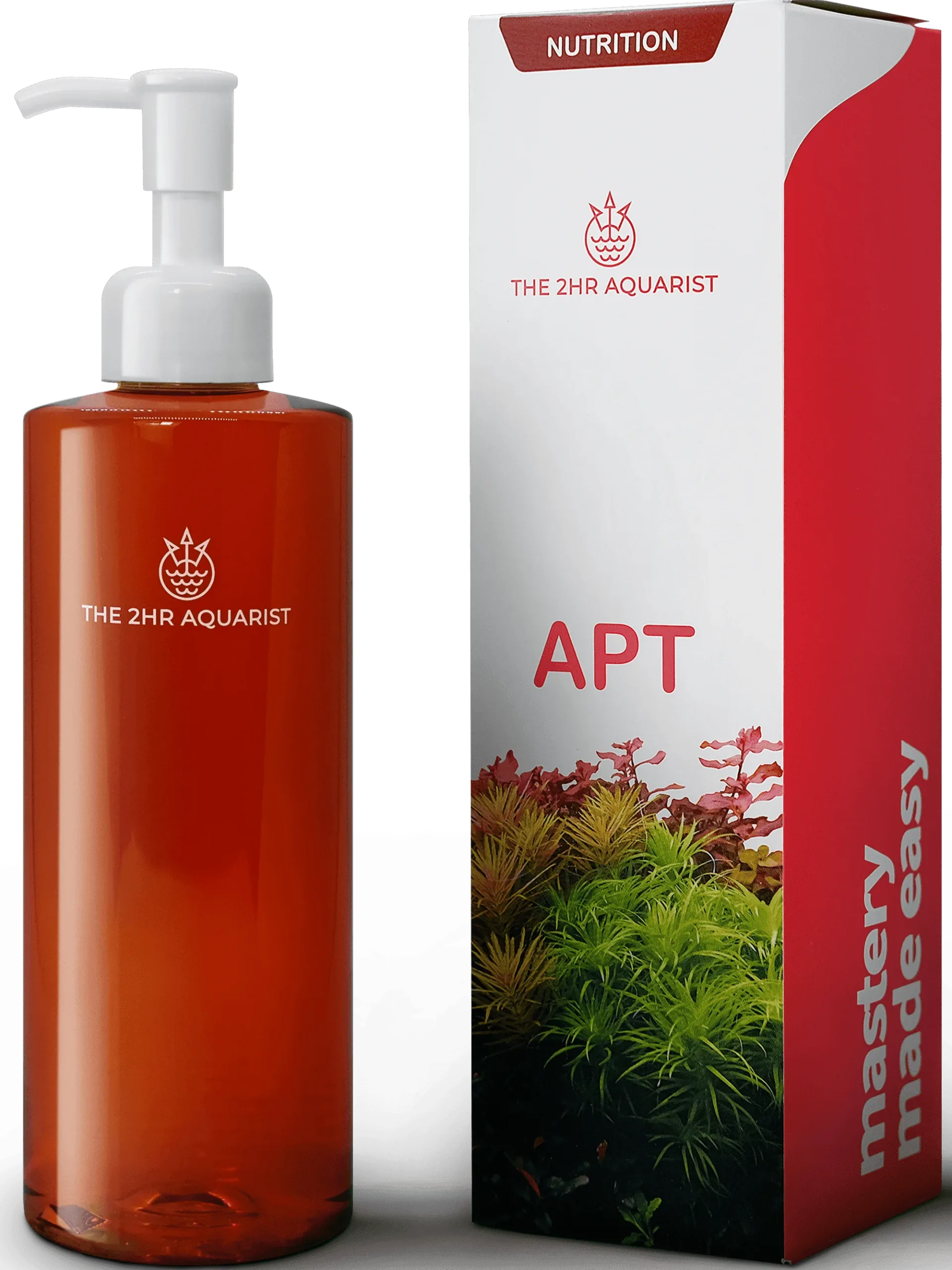
We transitioned from APT 1 to APT 3 (APT Complete). This is the all-in-one super-fuel. It reintroduces nitrates and phosphates to the water column in a perfect ratio (The famous Capstone Ratio). The difference was immediate. The green plants became vibrant and robust, and growth rates increased. For tanks with fewer fish (meaning less fish waste to provide nitrates), APT 3 is the essential engine that keeps the jungle growing.
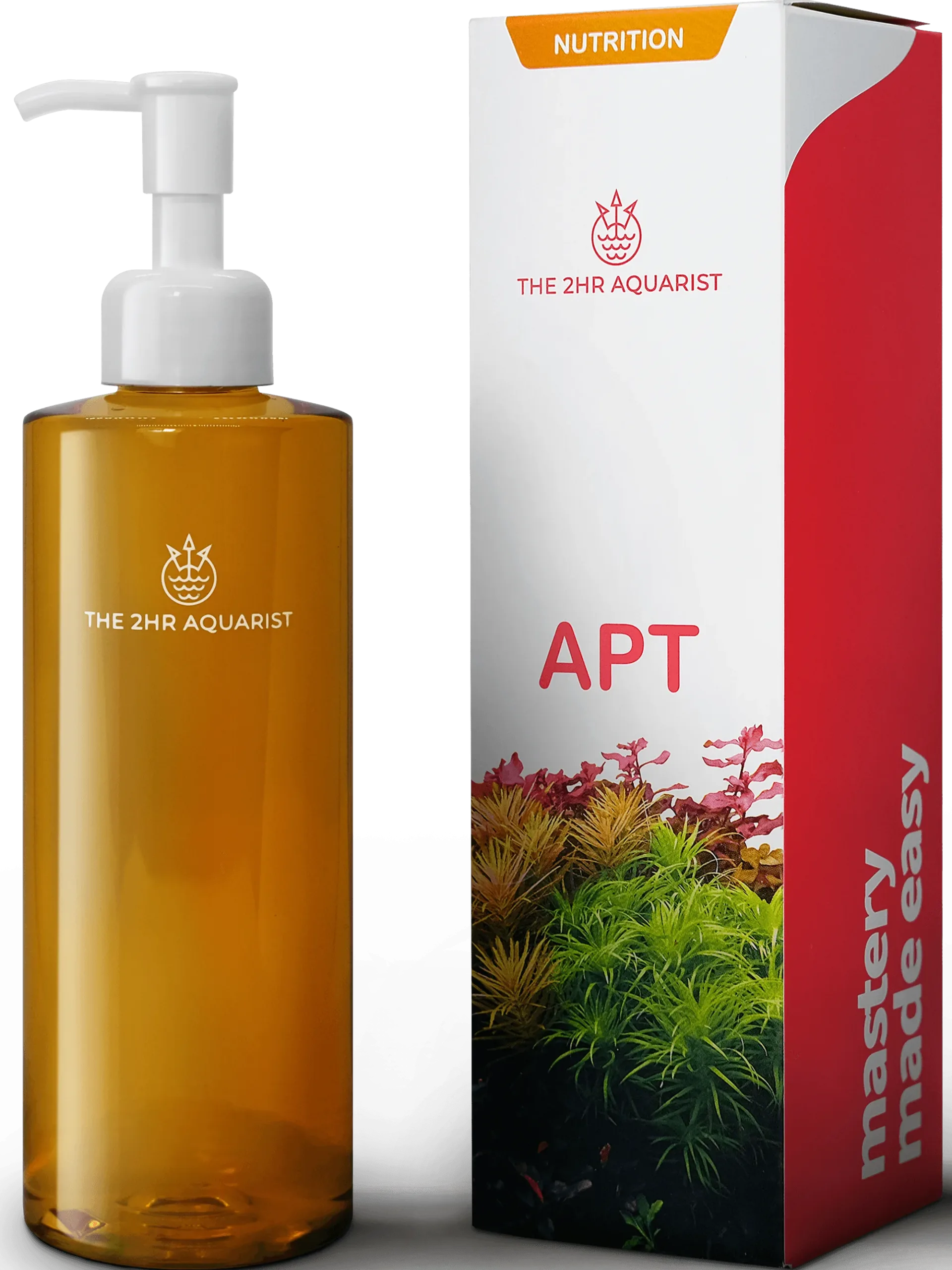
Pro Tip: For the true “speed demons” and Dutch-style tanks packed with fast-growing stems, we experimented with APT E (Estimative Index). This is the heavy-duty version for tanks with incredibly high energy and uptake rates, ensuring no plant ever goes hungry.
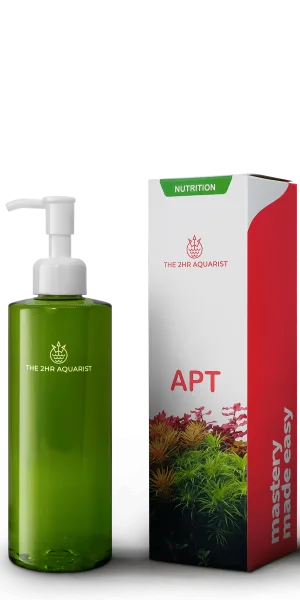
APT E
Chapter 5: Long-Term Sustenance (Month 6 and Beyond)
Every resource is finite. After six months of vigorous growth, even the best substrate begins to deplete. The plants, particularly heavy root-feeders like Cryptocoryne and Echinodorus, began to show subtle signs of slowing down. We didn’t need to tear down the tank; we just needed to replenish the bank.
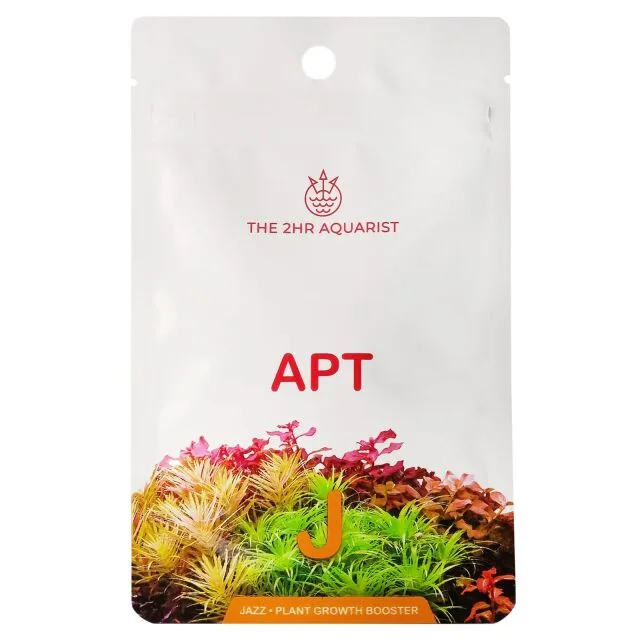
Enter APT Jazz. These aren’t your standard root tabs. Using ammoniacal nitrogen, APT Jazz rejuvenates the substrate, effectively giving the soil a “second wind.” We inserted these capsules deep into the root zones of our centerpiece plants. The result? A resurgence in size and colour saturation, proving that a mature tank doesn’t have to decline, it just needs the right maintenance.
The Epilogue: A System in Balance
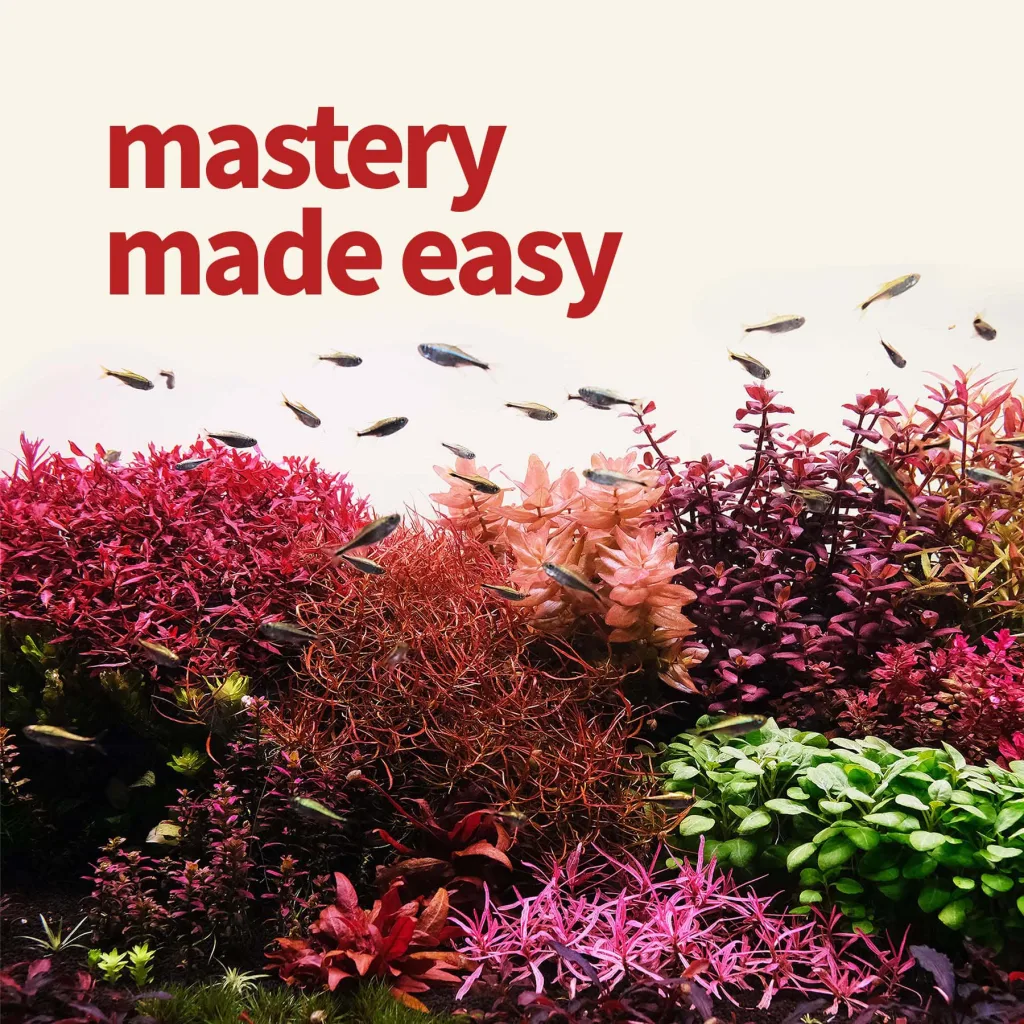
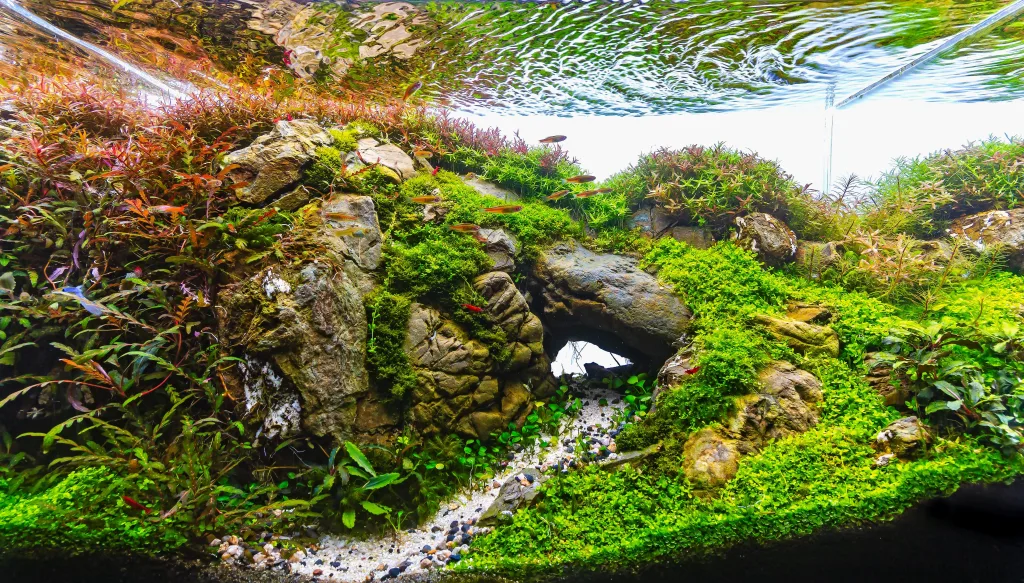
Looking at the tank now, six months later, the water is crystal clear, and the plants are pearling vigorously. The journey wasn’t about guessing or fighting nature; it was about understanding the specific needs of the aquarium at each stage of its life.
From the foundational richness of APT Feast to the calculated transition from APT 1 to APT 3, and finally the rejuvenation with APT Jazz, the 2Hr Aquarist approach turned a complex chemical balancing act into a simple, coherent story of growth.