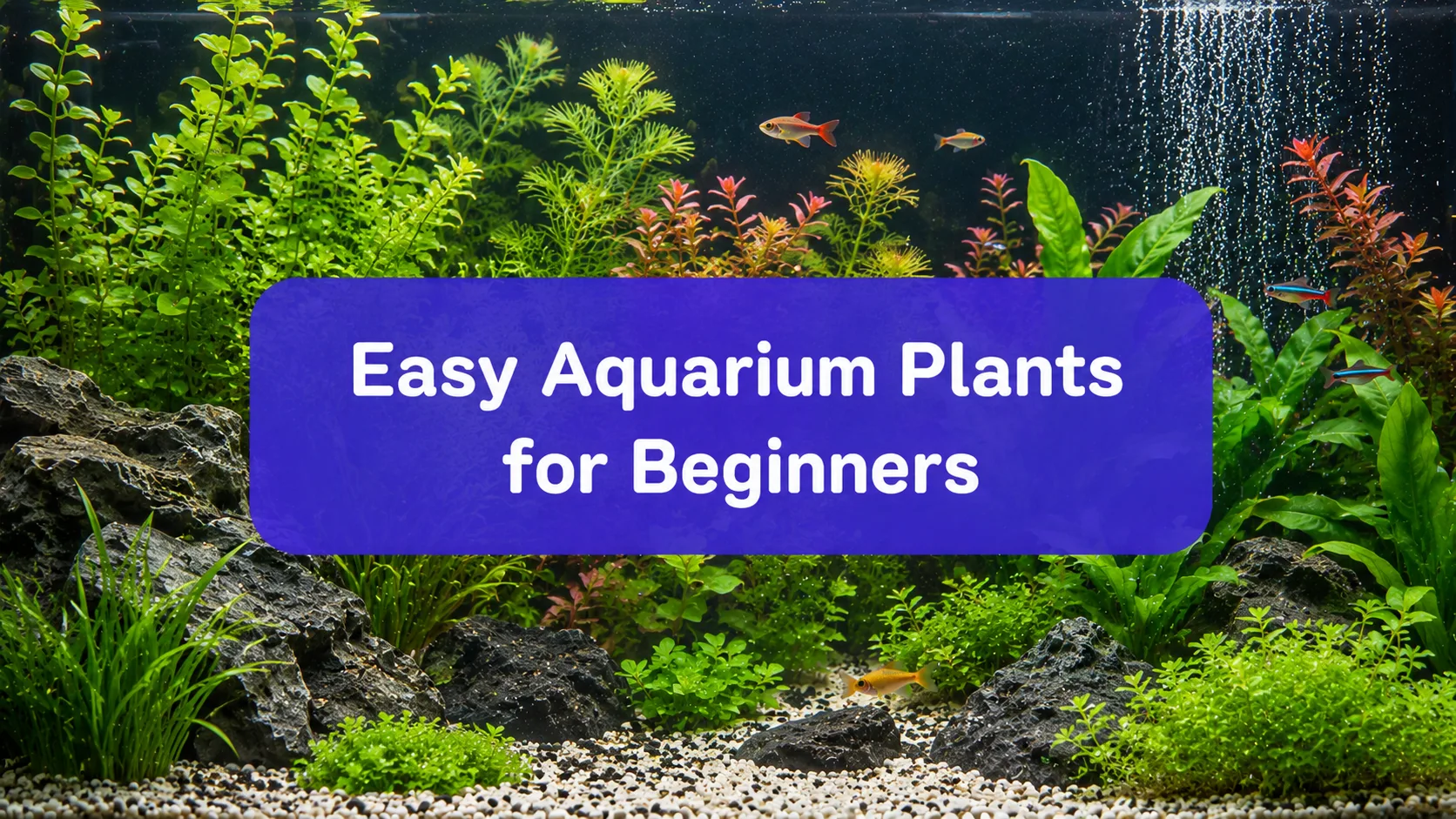
So you just got your first aquarium. That is exciting! But now you look at the tank and think… something is missing. The fish are swimming around, but the tank looks empty. You need plants. Plants make the tank look beautiful. They give fish places to hide. They also keep the water clean. But maybe you are worried. You think, “I am not good with plants. I will kill them.” Do not worry. Many aquarium plants are very easy to take care of. You do not need special lights. You do not need fancy plant food. You just put them in the water, and they grow.
In this blog we will show you the 10 best easy plants for beginners. These plants are tough. They do not die easily. They can grow in low light. They do not need special soil. Some of them do not even need to be planted in the ground. You can just let them float or tie them to a rock. So if you are new to fish tanks, this list is for you. Let us get started.
Java Fern (The Almost Unkillable Plant)
Java Fern is the number one plant for beginners. Why? Because it is almost impossible to kill. You can forget about it for weeks, and it will still be fine. It does not need bright light. A normal aquarium light is enough. It does not need special plant food. It gets what it needs from the fish waste in the water. That is pretty cool, right? The fish poop feeds the plant. So you do not need to add anything extra.
Here is the most important thing to know about Java Fern. Do not bury its roots in the gravel. If you do that, the plant will rot and die. Instead, you tie it to a rock or a piece of wood. You can use fishing line or cotton thread. After a few weeks, the roots will grab onto the rock by themselves. You can also just let it float in the tank. Java Fern has long green leaves. It looks great in the back or middle of your tank. It grows slowly, so you do not need to cut it often. This plant is a true winner for beginners.
Anubias (The Tough Little Plant)
Anubias is another super easy plant. It is very similar to Java Fern. You do not plant it in the gravel. You tie it to a rock or wood. Anubias has thick, dark green leaves. The leaves are very hard. Even fish that like to eat plants will leave Anubias alone because the leaves are too tough. That makes it great for tanks with goldfish or cichlids. Those fish usually destroy plants, but they cannot destroy Anubias. Anubias grows very slowly. That is good because you do not have to trim it. It does well in low light. It does not need CO2 or special fertilizers. Just put it in your tank and watch it live. There are different types of Anubias. Some have small leaves. Some have bigger leaves. All of them are easy. One thing to remember: do not let the thick root part (called the rhizome) get covered. Keep that part above the gravel. As long as you do that, your Anubias will live for many years. I have seen Anubias plants that are ten years old. That is a long time for a plant!
Java Moss (The Carpet That Grows Anywhere)
Java Moss is not a normal plant. It is a moss. That means it has no roots. It does not look like a typical plant with leaves and stems. Instead, it looks like a fuzzy green carpet. You can attach Java Moss to rocks, wood, or decorations. Over time, it will spread and cover everything. It gives your tank a very natural, wild look. Shrimp and baby fish love hiding in Java Moss. It is like a jungle gym for small creatures.
Taking care of Java Moss could not be easier. It grows in low light. It grows in high light. It grows in cold water. It grows in warm water. It grows when you ignore it. It grows when you pay attention to it. This stuff is almost unkillable. The only way to mess it up is to put it in complete darkness or boiling water. As long as you have some light and some water, Java Moss will survive. It grows pretty slowly in low light. But in brighter light, it will take over your tank.
To use Java Moss, just take a small clump and tie it to something with thread. Or you can let it float freely in the tank. Some people make a moss wall by sandwiching the moss between two pieces of mesh. Others let it grow into a big moss ball. Be aware that Java Moss can trap debris and old food. So you might need to gently swish it around during water changes to shake out the gunk. But that is not hard. Java Moss is a great choice for any beginner tank.
Amazon Sword (The Big Showpiece Plant)
Amazon Sword is for beginners who want a big, impressive plant. This plant grows tall and wide. It can reach 12 to 20 inches tall. That means it is great for the back of your tank. It gives a nice background for your fish. The leaves look like swords (that is why it is called a sword plant). They are bright green and beautiful.
Amazon Sword is easy to grow, but it has one small need. It likes to have its roots in gravel or sand. You do plant this one in the bottom. It also likes a little bit of fertilizer. You can buy root tabs. These are small tablets you push into the gravel near the roots. The root tabs feed the plant for months. But honestly, your fish waste might be enough. Many people grow Amazon Sword without any extra food. Just give it some light and it will grow. If the leaves turn yellow, add a root tab. That fixes the problem. This plant grows fast, so you might need to cut off old leaves sometimes. Just use scissors to cut the leaf at the very bottom.
Cryptocoryne (Crypts) – The Slow But Steady Plant
Cryptocoryne is a big group of plants. Most people just call them “Crypts.” These plants come in many colors. You can find green, brown, red, and even pink Crypts. They are all easy to grow. Crypts are slow growers. They do not need much light. In fact, too much light can be bad for them. They prefer low to medium light. So if you have a simple aquarium light that came with your tank, that is perfect.
Here is something weird about Crypts. Sometimes when you first put them in your tank, all their leaves melt away and disappear. Do not panic! This is normal. It is called “Crypt melt.” The plant is just getting used to your water. Give it a few weeks. New leaves will grow back. Those new leaves will be used to your water. After that, your Crypt will be fine for years. Crypts do best when planted in gravel or sand. They send out roots under the ground. They also send out baby plants nearby. Soon you will have a whole group of Crypts. That is a great look for any aquarium.
Hornwort (The Fast Growing Floating Plant)
Hornwort looks like a fluffy green pipe cleaner. It has no real roots. The stems are long and covered in little needle-like leaves. You can plant Hornwort in the gravel, but the bottom part might rot. Most people just let Hornwort float at the top of the tank. It looks cool floating there. Your fish will love swimming through the dangling stems. Hornwort grows super fast. Like really fast. In good conditions, it can grow several inches in one week.
The fast growth is actually a good thing for beginners. Why? Because fast growing plants eat up bad stuff in the water faster. Hornwort is amazing at removing ammonia and nitrates. That means your fish will have cleaner water. You will have to do fewer water changes. Hornwort also releases chemicals that stop algae from growing. That is a big bonus. Algae is the green slimy stuff that grows on tank glass. Less algae means less cleaning for you.
Hornwort does well in low to medium light. It does not need CO2 or fancy fertilizer. Just put it in the tank and watch it grow. The only downside is that Hornwort can be a little messy. The little needles fall off sometimes. If you move the plant around a lot, it will drop needles everywhere. So try to pick a spot and leave it alone. Also, Hornwort does not like very warm water. Keep your tank under 80 degrees and it will be happy. If your water is too hot, the plant might melt and fall apart.
Marimo Moss Ball (The Pet Rock That Is Alive)
Okay, this one is fun. Marimo Moss Balls are not really moss. They are a kind of algae. But they are the cutest algae you will ever see. They look like small green fluffy balls. They can be the size of a marble or as big as a baseball. They grow very slowly, like one millimeter per year. So your Marimo ball will stay the same size for a long time. These balls are almost impossible to kill. You can forget about them for months and they will be fine.
Here is how you take care of a Marimo Moss Ball. Put it in your tank. That is it. That is the whole care guide. No, seriously. They do not need light. They do not need food. They just sit there looking green and fuzzy. Sometimes they float. Sometimes they sink. Both are fine. If your ball turns brown, it might have too much light. Just move it to a darker spot. If it gets dirty, take it out and gently squeeze it in some old tank water. That cleans it. Marimo balls are great for small tanks and betta fish. Bettas love to rest on them. They are also fun to watch because they move around a little when water flows over them. It is like having a pet rock that is alive.
Water Wisteria (The Lacy Background Plant)
Water Wisteria is a beautiful plant. It has lacy, feathery leaves that are bright green. It grows tall and bushy. Fish love to swim through the leaves. It gives them a feeling of safety. Water Wisteria is very easy to grow. You can plant it in the gravel or let it float. It will grow either way. That is how tough this plant is. It does not care.
When you first get Water Wisteria, it might look different. Some stores sell it with big round leaves. That is the form it grows when it is out of water. After you put it in your tank, those round leaves will fall off. New lacy leaves will grow. Do not worry, that is normal. This plant grows fast. It eats up extra nutrients from the water. That helps stop algae from growing. Algae is that green slimy stuff that grows on tank glass. Nobody likes algae. So Water Wisteria is like a helper that keeps your tank clean. If it grows too big, just cut the top off and plant the cutting. The cutting will grow into a new plant. That means you can turn one plant into many plants for free.
Dwarf Sagittaria (The Grass That Spreads)
Dwarf Sagittaria looks like grass. It has thin, pointy green leaves that grow from a central spot. The leaves spread out like a little star. This plant is perfect for the front of your tank because it stays short. It usually only gets about 4 to 6 inches tall. That is short enough that it will not block your view of the fish. Dwarf Sagittaria makes a nice carpet on the bottom of the tank. Over time, it will send out runners and cover the whole floor.
Taking care of Dwarf Sag is very simple. Plant it in the gravel. Give it some light. That is pretty much it. It does not need root tabs, but it will grow faster if you use them. Low to medium light is fine. In low light, it will grow slower and stay shorter. In brighter light, it will grow faster and might get a little taller. This plant is very forgiving. If you forget to do water changes for a while, it will still be okay.
One thing to watch out for is that Dwarf Sagittaria can spread a lot. If you do not want it to take over your whole tank, you can trim the runners. Just snip them off with scissors. Or you can let it go wild and have a beautiful green carpet. That looks amazing. Fish like corydoras catfish love to rest on the leaves. Dwarf Sag is also great for shrimp tanks. It is a tough little plant that will make your tank look like a natural stream bed.
Bacopa Caroliniana (The Easy Stem Plant)
Bacopa Caroliniana is a stem plant. That means it grows straight up like a little tree. You cut a piece and stick the bottom in the gravel. Roots will grow from the stem. Then the plant grows taller. You can cut the top and plant it again to make more plants. It is very simple. Bacopa has round, thick leaves. The leaves are waxy and tough. They feel almost like plastic. That toughness helps the plant survive.
Bacopa can grow in low light. It grows faster in medium light, but low light is fine. It does not need CO2. It does not need fancy plant food. Just put it in your tank and watch it grow. One cool thing about Bacopa is that the top leaves can turn a little pink or red if you have good light. That is pretty. But even if they stay green, the plant still looks nice. Bacopa is also great because it grows slowly enough that you do not have to trim it all the time. But fast enough that you see progress. It is a good balance. This plant is not as famous as Java Fern or Anubias, but it deserves a spot on this list. It is just so easy and reliable.
Conclusion
So there you have it. Ten easy aquarium plants that any beginner can grow. You do not need a green thumb. You do not need expensive lights or special equipment. You just need to pick a few plants from this list and put them in your tank. I suggest starting with two or three plants. Java Fern and Anubias are great choices. Add a Marimo Moss Ball for fun. Once you see how easy those are, you can add more. Before you know it, your tank will be full of beautiful green plants. Remember, plants make your fish happier. Fish come from rivers and lakes with lots of plants. They feel safer when they have places to hide. Plants also make your job as a fish keeper easier. They clean the water and reduce algae. That means less work for you. So go ahead and add some plants. Your fish will thank you. And you will feel proud every time you look at your beautiful, natural aquarium. Happy fish keeping.