Lukas, an aquarist from Hamburg, had been keeping fish for nearly five years. His 180-litre freshwater setup was something to admire, rooted driftwood, healthy Amazon swords, a tidy group of pearl gouramis, and water so clear it looked like glass.
Last Tuesday, Lukas noticed something odd.
The water had a faint haze, and one of his female gouramis was unusually still near the top. Not gasping, just… hovering. He chalked it up to a long day and topped off the tank.
By the next morning, the haze had thickened. Two cherry barbs were nowhere to be found. And the gourami? Gasping at the surface. Lukas leaned in and picked up a scent, something sharp, acrid. His gut dropped.
He reached for his API test kit. The ammonia reading: 2.0 ppm.
That’s when the panic set in.
If you’ve ever had that moment, that subtle gut-check when your aquarium looks fine but something feels wrong, this guide is for you.
Whether you’ve been keeping aquariums for six months or several years, ammonia spikes don’t always announce themselves with drama. They often start with one quiet fish, a little cloudiness, or a missing snail.
And when they hit, they hit hard.
This article walks you through the real signs of high ammonia, before it’s too late, with practical, proven steps to get your aquarium stable again fast. But first, we must understand what an Ammonia spike is and why aquarists should be wary.
What is Ammonia and Why is It So Dangerous In Aquariums?
Ammonia (NH₃) is a colourless, invisible substance that’s released whenever organic matter starts to break down in your aquarium. That means fish waste, uneaten fish food, rotting plants, dead snails, even a hidden fish that died behind the filter, all of these contribute to ammonia in your water. The more life in your tank, the more ammonia is being produced daily.
Luckily, aquariums have a natural defence mechanism for this: the nitrogen cycle.
In a stable, “cycled” tank, beneficial bacteria in your filter media, gravel and décor are quietly converting ammonia into less harmful substances. These bacteria work in two stages. First, Nitrosomonas bacteria convert ammonia into nitrite (NO₂⁻), which is still toxic to fish. Then, Nitrobacter or Nitrospira bacteria convert nitrite into nitrate (NO₃⁻), which is much less harmful and can be removed with water changes or absorbed by plants.
This biological process happens 24/7. It’s silent. It’s invisible. And when it works, your fish thrive without you even thinking about it.
What Causes High Ammonia Levels in a Fish Tank?
But when that cycle is interrupted, maybe because you added too many fish at once, over-cleaned your aquarium filter, used a strong medication or forgot a water change, the bacteria can’t keep up. That’s when ammonia levels rise faster than they can be processed. And that’s when things start to go wrong.
Even a small amount of unprocessed ammonia, as little as 0.25 ppm(parts per million), can start to harm fish. At first, it’s subtle. You might see faster gill movement or a fish hovering near the surface. But as the levels rise to 1 ppm and above, ammonia starts to burn their gills, disrupt their breathing and damage internal tissues.
Your fish might stop eating. Some may become lethargic. Others may dart or twitch as their nervous system starts to feel the strain. At 2 ppm and above, ammonia becomes deadly, especially to invertebrates and more delicate species. There’s another layer of complexity many aquarists miss: ammonia’s toxicity depends on the pH of your aquarium. Ammonia exists in two forms in water: NH₃ (toxic ammonia) and NH₄⁺ (ammonium), which is much less harmful. In more acidic tanks (pH under 7, a larger portion of the ammonia shifts into the safer ammonium form. But in alkaline tanks (pH 7.5 to 8.5), ammonia stays in its toxic NH₃ form and becomes exponentially more deadly.
Two tanks can show the same test result on a kit, say 0.5 ppm, but in one tank, that might be manageable. On the other hand, it could be deadly. This is especially important in parts of Europe where tap water tends to have a naturally higher pH. That means your tank is more vulnerable to toxic ammonia even at lower readings.
The worst part? Ammonia gives little warning. It’s not visible, and unless you’re testing regularly, you might only catch it once your fish start acting differently, by which point the damage may have already begun. So, how do you spot this debilitating ammonia spike in your aquarium and protect your fish?
The 5 Major Warning Signs of High Ammonia Levels in an Aquarium
1. Cloudy or Milky Water
The first sign of high ammonia is a hazy look to your aquarium water. Not dirty exactly, but as if someone stirred a teaspoon of milk into it overnight. And in many cases, the culprit is a spike in ammonia.
When ammonia levels rise, it doesn’t just affect your fish; it also triggers a reaction from your tank’s microscopic life. The imbalance causes a bacterial bloom where certain waterborne bacteria multiply rapidly to feed on the excess waste. That explosion of invisible organisms is what gives the water that milky, fog-like appearance.
This is common in new tanks that haven’t fully cycled yet or in established tanks where the biological filter has been disrupted, maybe during a deep clean, a filter change or even after using certain medications.
But cloudy aquarium water is not always caused by ammonia, and not every fog is an emergency. But if your tank suddenly turns cloudy and you’re noticing other changes like odd fish behaviour, a sour smell or surface gasping, then ammonia should be your first suspect.
Well, this kind of bloom is your system trying to self-correct. But it also means your water quality has changed rapidly, and your fish are now in the middle of that storm. The longer you leave it untested, the more risk you’re exposing them to.
As a rule of thumb, always test for ammonia, nitrite and nitrate when your water becomes suddenly milky. If ammonia is present even at low levels like 0.25 ppm, your fish are already stressed. The sooner you respond, the better their chance of recovery without long-term damage.
2. Fish Gasping at the Surface
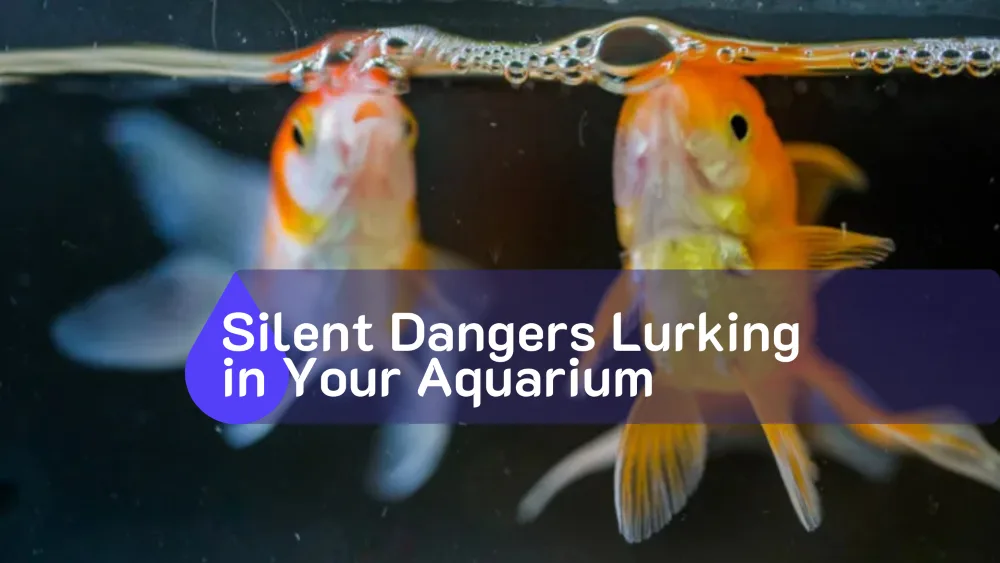
If your fish are swimming near the top of the tank, opening their mouths repeatedly or gasping at the surface even with an air stone or good water flow, it’s a big red flag, often caused by high ammonia in the tank.
Ammonia poisons the delicate gill tissue that fish use to breathe from the water. When that tissue gets inflamed or burned, fish can’t breathe even if there’s plenty of oxygen. Gasping, rapid gill movement or surfacing in groups is an emergency sign that toxic water is occurring.
This is often mistaken for low oxygen, and hobbyists add more aeration. But unless you address the root cause, usually ammonia, your fish won’t get better. Test your water now. If ammonia reads above 0 ppm, your tank is in trouble. Act fast, and you may be able to save your fish from damage or death.
3. Lethargy or Erratic Behaviour
When a fish stops swimming, hides for hours, floats at the bottom or swims in short, wild bursts, we assume they’re tired or startled. But if several fish are acting weird or their behaviour changes in a day or two, ammonia stress is the culprit.
Ammonia poisoning doesn’t just harm a fish’s gills; it affects their whole body. As the levels rise, ammonia starts to interfere with the central nervous system and coordination. For some fish, that feels like fatigue or dizziness. For others, it shows up as twitching, darting, or even swimming upside down. You may also see loss of appetite, clamped fins or a general feeling that your fish are “off”.
What’s especially scary is how easy it is to misread. A quiet fish might seem calm, and a twitchy one might seem playful until it’s too late.
Don’t assume behaviour changes are random. Always test your water for ammonia, nitrite and pH if your fish become lethargic or erratic. These are early warning signs and your best chance to intervene before it’s too late.
4. Loss of Appetite
When a fish that normally zooms to the surface at feeding time shows no interest in food, it’s more than just a mood swing; it’s often an early warning sign of environmental stress. And one of the most common causes of this sudden loss of appetite is ammonia.
Fish are sensitive creatures. When ammonia levels start to rise, even slightly, their bodies react fast. Internally, ammonia interferes with metabolism, digestion and immune function. Externally, it irritates the gills and disrupts oxygen uptake. The result? A fish that just doesn’t feel well enough to eat.
You might see food floating uneaten, a fish that bites and spits, or one that hides during feeding altogether. A single missed meal isn’t a danger sign, but a pattern of refusal, especially in an active eater, should never be ignored.
In nature, fish stop eating when they’re sick, injured or sense unsafe conditions. The same instinct kicks in in your tank.
If your fish are refusing food and nothing else has changed in your routine, test your water immediately. Loss of appetite is often one of the first subtle but urgent signs that something toxic like ammonia is building up.
5. Red or Inflamed Gills
One of the most obvious physical signs of ammonia poisoning is redness or swelling in your fish’s gills. At first glance, it may just look like deeper colouring, but a closer look will often reveal inflamed, irritated tissue, which aquarists call ammonia burn.
When ammonia levels rise, the gill membranes, which are delicate and highly vascular, are the first to suffer. Ammonia interferes with the gills’ ability to process oxygen, causing inflammation, cellular damage and in some cases chemical burns. This leaves the fish struggling to breathe, panting or resting near filter outlets where the oxygen is highest.
You may see your fish flaring their gill covers more than usual or “breathing” rapidly even when they’re not exerting themselves. In more severe cases, the gill tissue may look bloody, ragged or eroded.
These are uncomfortable for the fish and a red flag for you as a keeper. If left untreated, ammonia burn can lead to permanent gill damage, suffocation or death even if the ammonia levels return to normal later.
If you see red gills and surface gasping or lethargy, act fast. Test your water immediately. The damage from ammonia burn starts before your tank looks cloudy.
Bonus Signs of High Ammonia Most People Miss
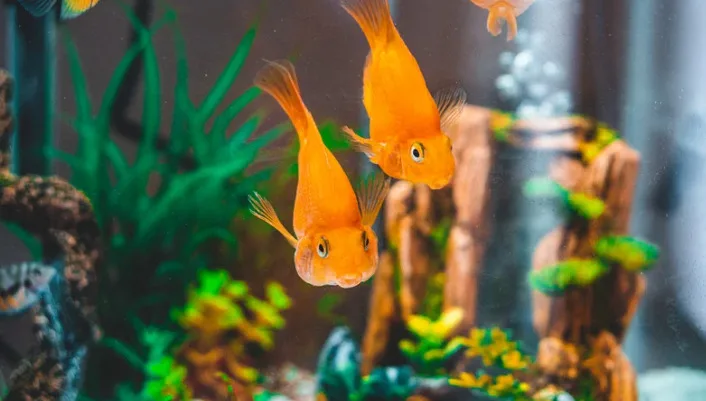
Not all signs of ammonia stress are obvious, especially early on. In many tanks, it’s the smallest, quietest creatures that react first. If your shrimp or snails start dying for no reason, it could be your tank’s first warning sign.
- Invertebrates like shrimp, snails and certain microfauna are super sensitive to water quality. They have no protection against toxins like ammonia. A sudden wave of unexplained deaths, especially when your fish seem fine, usually means an invisible spike in ammonia or nitrite. Shrimp will turn pale or motionless before they die, snails will withdraw into their shells, become unresponsive or fall off the glass.
- Another easy-to-miss sign is smell. A healthy tank should have a mild, earthy smell like a natural stream or pond. But if you smell a strong, sour or rotten smell, especially after feeding or cleaning, it’s a sign that organic waste is decomposing faster than your filter can handle. That means ammonia is building up behind the scenes.
Trust your nose and your tank’s smallest residents. They react long before your fish shows distress, giving you a small but crucial window to test, diagnose and take action before things get worse.
How to Fix High Ammonia Levels Fast (Without Losing Your Fish)
- Do a 40–50% Water Change Quickly
Why: This is because water changes dilute the ammonia in the aquarium immediately and are the quickest way to reduce toxicity and stress on your fish.
How to do it safely:
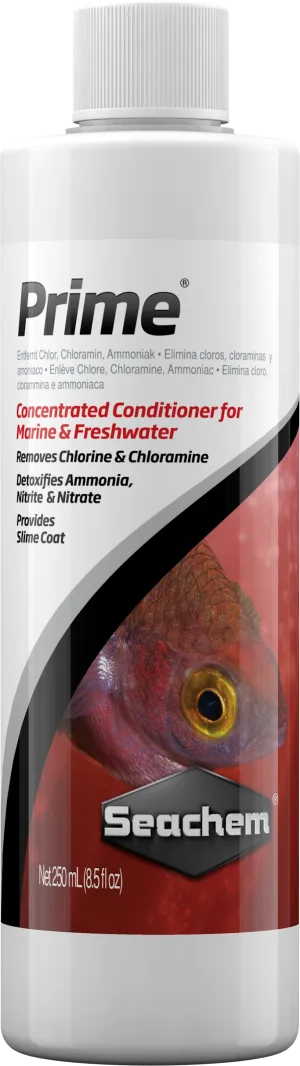
First, you use a siphon to remove 40–50% of the aquarium water. Make sure the replacement water is dechlorinated with Seachem Prime, API Stress Coat or Tetra AquaSafe. If you don’t, chlorine from tap water will kill off beneficial bacteria, making things worse.
When: Now. This is step one and most important. You may need to do daily partial water changes until the ammonia reads 0 ppm.
What to avoid: Don’t do 100% water changes unless it’s a last resort. Sudden changes in temperature, pH or hardness can shock or kill fish, even if ammonia drops.
- Ammonia Detoxifier
Why this helps: Detoxifiers neutralise the toxicity of ammonia. They don’t remove ammonia but convert it to a non-toxic form (bound ammonium) that your filter bacteria can still process.
Best products to use:
- Seachem Prime (highly recommended; also detoxifies nitrite and nitrate)
- API Ammo-Lock (specifically targets ammonia)
- Tetra SafeStart with conditioners for bacterial support
How much to use: Follow the product’s emergency dosing instructions. For example, Seachem Prime allows for up to 5x the normal dose in emergencies safely.
How long it works: Usually effective for 24–48 hours, depending on ammonia load and bacterial strength.
Can I use this alone? No always pair with water changes. Detoxifiers buy time, but they don’t fix the root cause.
- Stop Feeding for 24 to 48 Hours
Why: Every bite of food becomes waste. Stopping feeding stops ammonia production in the tank.
Isn’t that bad for the fish? Not at all. Healthy fish can go days without food. A short fast reduces digestive waste and gives your filter time to catch up.
How long should I stop feeding? 24 to 48 hours. Feed tiny amounts once water parameters stabilise and ammonia drops below 0.25 ppm.
What if I have fry or sensitive species? In those cases, just reduce feeding instead of stopping completely, but feed very lightly and remove uneaten food promptly.
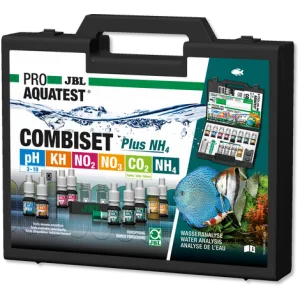
- Test Your Fish Tank Water Daily With a Liquid Test Kit
Why this matters: It’s nearly impossible to manage what you don’t measure. Water may look clear, but ammonia, nitrite and nitrate can fluctuate invisibly. Testing helps you respond before things get worse.
What to test for:
- Ammonia (NH₃/NH₄⁺)
- Nitrite (NO₂⁻)
- Nitrate (NO₃⁻)
- pH (because ammonia is more toxic at high pH)
Best testing tools:
You can use a liquid test kit like the API Master Test Kit. Test strips can be inconsistent and are often unreliable when you need precision most. Although there are other product options, you can choose what’s best for your aquarium.
How often to test: Try at least once daily during a crisis. For severe spikes, test twice daily, morning and night, to catch changes.
When to stop daily testing: When ammonia reads 0 ppm for 2 to 3 days in a row, nitrite is dropping, and nitrate is stable. Then you can rest.
- Clean Your Filter But Gently
Why this step matters: If your filter is clogged, bacteria can’t breathe or process ammonia efficiently. But if you over-clean, you’ll remove the very bacteria your tank depends on.
How to do it safely:
- Rinse sponges or media in tank water, never tap water.
- Only clean one part of the filter at a time.
- If using ceramic rings or bio balls, don’t scrub them, just swish to remove debris.
What not to do:
- Don’t replace all your media at once.
- Don’t use soap or chlorinated water.
- Don’t turn the filter off for long periods.
What to expect: Once cleaned, your flow should improve, and your bacteria will work more efficiently to convert ammonia.
- Check for Hidden Dead Fish or Waste
Sometimes, a single dead fish hidden behind a rock can cause an ammonia spike. Do a thorough check of your tank.
How to Test Ammonia Levels in Your Aquarium Water
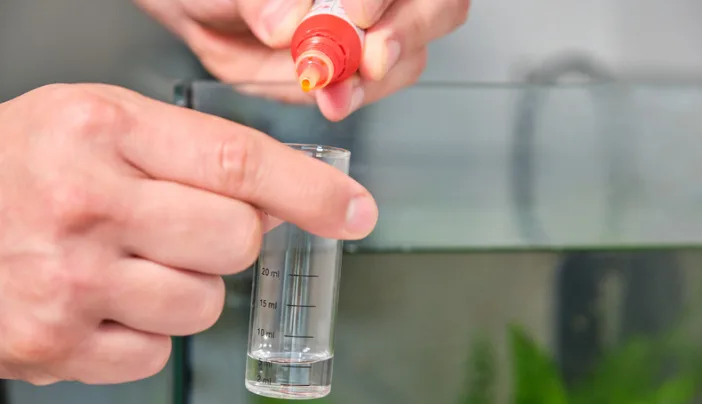
Even in a crystal clear aquarium, invisible ammonia can rise fast. Testing your water is the only way to catch a problem before it harms your fish.
There are two options:
A. Liquid Test Kits
Liquid test kits, like the API Freshwater Master Test Kit, are the most accurate for ammonia. It uses chemical drops that react with your tank water to show a colour result you compare to a chart.
B. Test Strips
Think of it like a quicker but less reliable on results. They often give inconsistent ammonia readings and can be hard to interpret in an emergency. They’re fine for quick checks but not ideal for serious monitoring.
When to Test?
- New tanks: Daily during cycling (first 4 to 6 weeks).
- Established tanks: Weekly or during water changes.
- After ammonia signs: Immediately, then daily until stable
If you suspect ammonia poisoning, don’t “wait and see.” Act now. Even a short delay can result in irreversible damage or sudden fish loss.
Catching ammonia spikes early and taking swift action can be the difference between a thriving aquarium and a heartbreaking wipeout.
Your fish depend on you, and with the right care, you can give them the safe, stable home they deserve.
Frequently Asked Questions (FAQ) About Aquarium Ammonia
How do I Test For Ammonia in an Aquarium?
- Step 1: Use a clean test tube or container to start.
- Step 2: Next, you fill it with tank water (not tap water).
- Step 3: Now, you can add the specified number of reagent drops from your kit (usually two types).
- Step 4: Cap and shake gently.
- Step 5: Wait for the development time (usually 5 minutes). Step 6: Compare the colour to the ammonia chart.
Please note that you’re looking for 0 ppm as the safe range. Anything above 0.25 ppm needs attention quickly.
Help! What If the Colour Is Hard to Read?
Don’t panic, you can always hold the test tube against a white background in natural light. If in doubt, test again or compare with photos online for reference. Also, make sure your kit is not expired; old reagents can give false readings. You need to test regularly and record somewhere for easy referencing.
Can fish recover from ammonia poisoning?
Yes, but time is of the essence. If caught early and treated properly, many fish will bounce back from ammonia exposure within days. But recovery depends on how high the ammonia was, how long they were exposed, the species involved and how quickly you responded.
Will a Water Conditioner remove bad Ammonia?
No, most standard water conditioners do not remove ammonia.
But some specialist conditioners can detoxify ammonia temporarily, making it safe for fish while your filter bacteria process it.
What Do Most Water Conditioners Do?
Basic water conditioners like Tetra AquaSafe or API Tap Water Conditioner are designed to:
- Neutralise chlorine and chloramine
- Bind heavy metals
- Make tap water safe for aquarium use
But if your tank already has ammonia (from fish waste, uneaten food or a dead animal), these products won’t remove or detoxify it. Water conditioner is not a magic fix, but it’s an essential tool when used correctly. Think of ammonia detoxifiers as buying you time, not solving the root problem. For a true fix, you need clean water, stable filtration and a fully cycled tank.