Why Use an RO Filter?
In many parts of the world, tap water is much harder than the natural waters where most tropical fish originate. While tropical habitats often have a general hardness (GH) around 4–5, some regions have water that can reach GH 15–25 or even higher.
If you live in an area with hard or very hard water, are concerned about your tap water quality, or plan to keep a saltwater aquarium, a reverse osmosis (RO) system offers a reliable solution. This process produces purified water that closely resembles the natural conditions of tropical rivers or the sea.
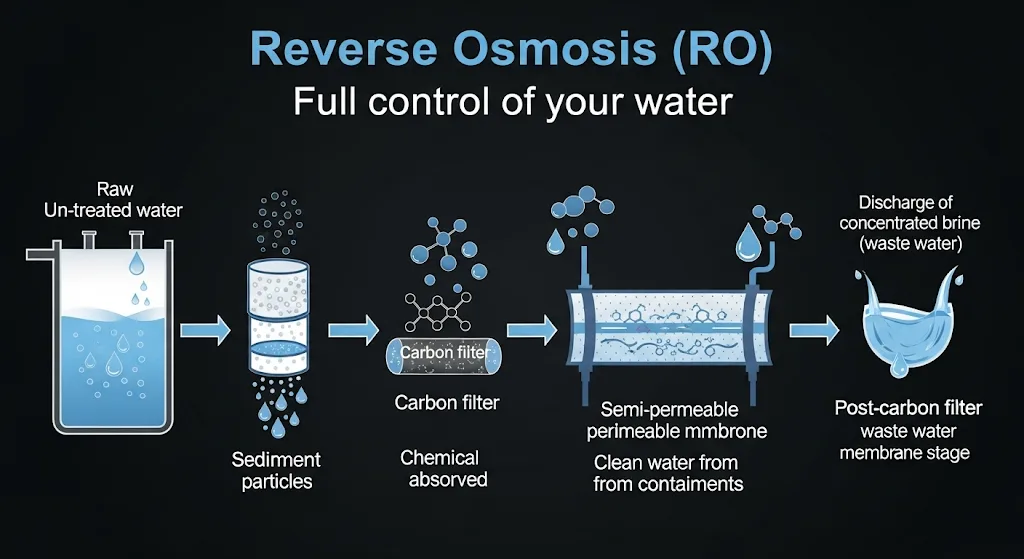
An RO filter works by forcing tap water through a fine membrane using water pressure. The membrane allows only pure H₂O molecules to pass through while rejecting dissolved salts, heavy metals, chlorine, and other contaminants. The result is clean reverse osmosis water, ideal for aquariums after adjustment.
The system produces two outputs:
- Purified water – suitable for aquariums once mineral balance is restored.
- Wastewater – high in salts and minerals, which should not be used in the aquarium but can be repurposed for cleaning or watering plants.
How RO Filters Work

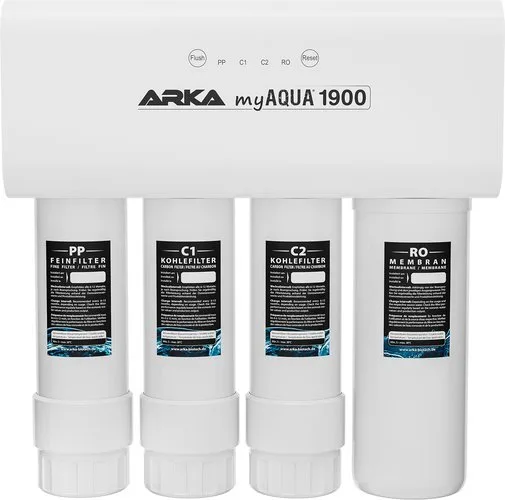
An RO system usually includes pre-filters to remove chlorine, heavy metals, and sediment before water reaches the membrane. These pre-filters protect the delicate membrane and need regular replacement to ensure long lifespan.
The purified water is extremely soft and almost free from dissolved minerals. Because aquariums need a stable mineral balance to buffer pH and support aquatic life, RO water should always be re-mineralized before use.
Types and Efficiency
RO filters vary in efficiency. Their performance is measured by the ratio of clean water to wastewater, for example, 1:4 (one unit of purified water for four units of wastewater). More advanced systems may use multiple membranes to improve this ratio.
The actual output depends on temperature and water pressure. Most systems are rated at 25°C with about 4 bar of pressure. In reality, colder tap water and lower pressure will reduce production. For higher efficiency, a booster pump can be added.
For example in the market right now ARKA myAqua filters have the best efficiency with a ratio of 1:1-1.5.
Setting Up an RO System
Installation is straightforward. The device connects to a cold-water tap and drains wastewater into a sink or drain. Before first use, it is recommended to let the system run for a few hours to rinse the membrane.
Some practical tips:
- Place the unit where any leakage will not cause damage.
- Ensure connections are watertight.
- Always discard the first few hours of production when the system is new or unused for long periods.
- Collect purified water in a container with overflow protection to avoid spills.
Using Reverse Osmosis Water in Aquariums
Pure RO water has almost no hardness, which makes it unstable on its own. To create suitable conditions for fish, plants, or corals, minerals must be added back in. This step restores the mineral balance, buffers pH, and ensures stable water chemistry.
Different aquariums require different hardness levels:
- Discus fish: 3–5 GH
- Tropical planted aquariums: 4–7 GH
- Malawi cichlids: 3–6 GH
- Tanganyika cichlids: 8–12 GH
For marine aquariums, specialized reef salts are added to transform RO water into seawater.
Maintenance and Care
RO systems are generally low-maintenance, but a few practices will ensure long-term efficiency:
- Replace pre-filters regularly (every 6–12 months).
- Rinse the membrane according to your water hardness.
- Prevent the membrane from drying out during long storage.
- Replace the membrane every 3–8 years, depending on usage and water quality.
If the flow rate decreases or the purified water’s hardness rises to more than 25% of the tap water’s hardness, it’s time to replace the membrane.
Troubleshooting Common Issues
- Low water output: Check water pressure, clogged pre-filters, or bent hoses.
- High wastewater output: The membrane may be clogged or the bypass left open.
- Leaks: Ensure seals and fittings are correctly placed and not overtightened.
Final Thoughts
A reverse osmosis system is an invaluable tool for aquarists who want to recreate natural water conditions and maintain healthy aquatic environments. By producing high-quality reverse osmosis water, adjusting the mineral balance, and following simple care routines, you can ensure your fish and plants thrive in conditions close to their natural habitats.