Behind every stunning aquarium is a foundation of consistent care, and no task is more fundamental than the water change. Far from a simple chore, a water change is the most powerful tool you have to manage and rejuvenate your aquatic ecosystem.
An aquarium is a closed system. Unlike a river or lake, waste produced by fish and leftover food remains in the tank, breaking down into harmful substances. A water change mimics nature’s refresh cycle, flushing out pollutants and bringing in essential minerals. This guide will give you the essential knowledge to master this vital task.
Why Aquarium Water Changes are Essential
To appreciate the importance of a water change, you need to understand the invisible processes happening in your tank.
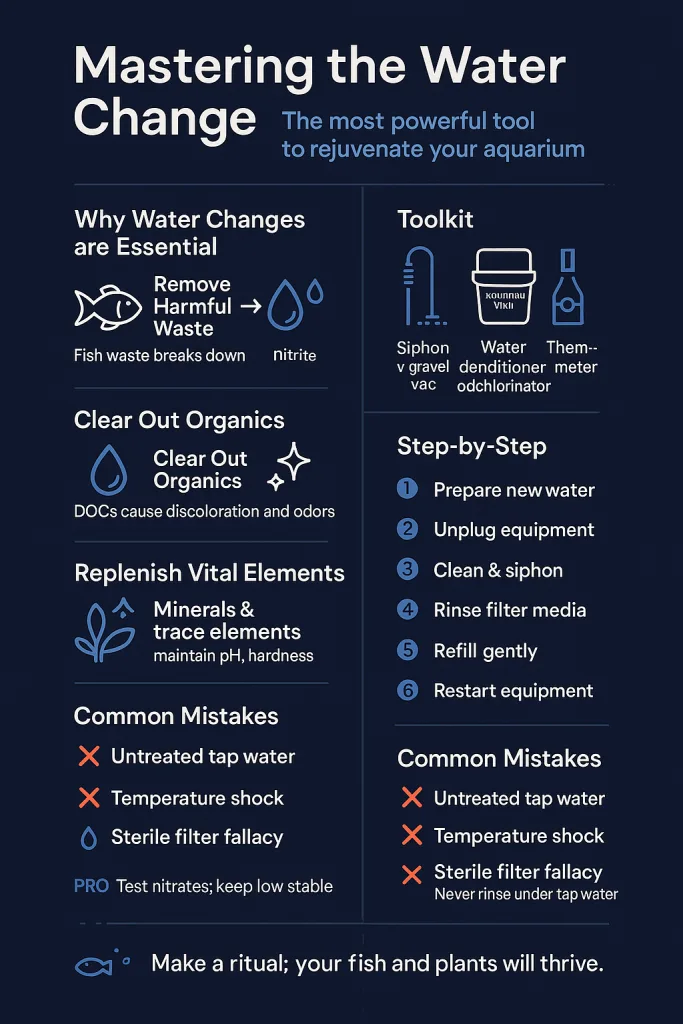
- Removing Harmful Waste: Fish waste and uneaten food produce toxic ammonia, which beneficial bacteria in your filter convert to nitrite and then to a less harmful compound called nitrate. However, nitrate still accumulates over time. High levels of nitrate stress fish, weaken their immune systems, and fuel algae growth. A water change is the most direct way to physically remove these nitrates.
- Clearing Out Organics: Beyond nitrates, waste also breaks down into Dissolved Organic Compounds (DOCs). These compounds can turn your water yellow, cause odors, and are a primary food source for nuisance algae. Regular water changes are the only reliable way to remove them.
- Replenishing Vital Elements: Just as harmful compounds build up, essential minerals and trace elements are consumed by your fish and plants. A water change replenishes these vital components, ensuring your aquarium’s inhabitants have what they need to thrive and helping to keep water parameters like pH and hardness stable.
How Much and How Often?
There is no single rule for every tank; the perfect schedule depends on your specific setup. The key factors are bioload (the number and size of your fish) and plant mass.
- General Guideline: A 35% water change every one to two weeks is a great starting point for the average community tank.
- High Bioload Tanks: Tanks with large, messy fish like goldfish or oscars produce more waste and require larger, more frequent changes (e.g., 50% or more weekly).
- Planted Tanks: Heavily planted tanks with few fish can often go longer between changes, as plants consume nitrates as fertilizer.
- Sensitive Species: Some delicate fish or shrimp may be stressed by large changes in water chemistry. For these, smaller, more frequent changes are safer.
Ultimately, testing your water for nitrates is the best way to determine if your schedule is effective. Aim to keep nitrates at a low, stable level.
The Perfect Water Change: A Quick Guide
A well executed water change is a smooth, stress-free process.
Your Toolkit:
- A siphon with a gravel vacuum attachment.
- A clean bucket used only for the aquarium.
- A water conditioner/dechlorinator.
- An accurate thermometer.
Step-by-Step Process For Changing Aquarium Water:
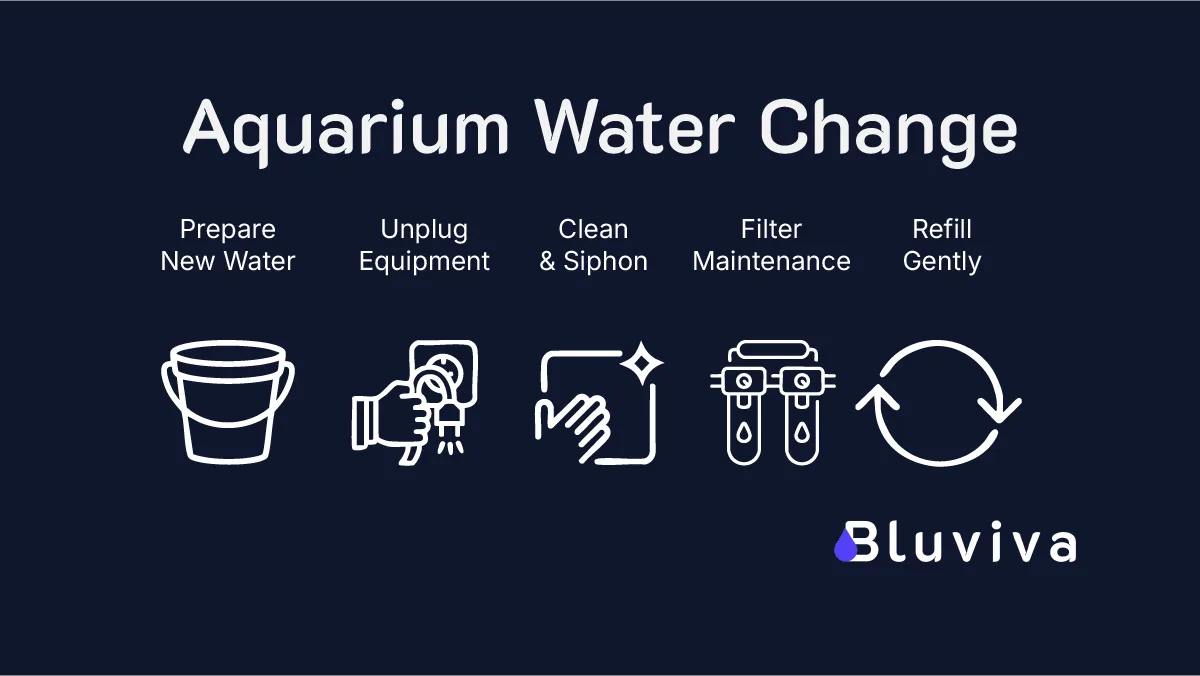
- Prepare New Water: Fill your bucket with tap water. Add a water conditioner to neutralize harmful chlorine and chloramines. Use a thermometer to match the temperature of the new water to your tank’s water. This is critical to avoid shocking your fish.
- Unplug Equipment: Before the water level drops, turn off your filter, heater, and any pumps.
- Clean and Siphon: Scrape algae from the glass first. Then, use your siphon to vacuum debris from the gravel while draining the desired amount of water into the empty bucket.
- Filter Maintenance (The Right Way): Take the sponges or media from your filter and gently rinse them in the bucket of old tank water you just removed. Never wash filter media with tap water, as the chlorine will kill the beneficial bacteria.
- Refill Gently: Pour the prepared new water back into the aquarium slowly. Pouring it onto a decoration or your hand can help diffuse the flow and prevent stress. Once the tank is full, you can plug your equipment back in.
Common Mistakes to Avoid When Changing Aquarium Water
- Using Untreated Tap Water: Chlorine in tap water is lethal to fish and the beneficial bacteria in your filter. Always use a dechlorinator.
- Temperature Shock: Adding water that is too cold or too warm can severely stress or kill your fish. Always match the temperature.
- The “Sterile Filter” Fallacy: Cleaning your filter media under tap water destroys your biological filter. Only ever rinse it in old tank water.
- Changing 100% of the Water: A complete water change can crash your tank’s nitrogen cycle and cause a fatal chemical shock to your fish. Stick to partial changes.
- Confusing Top-Offs with Water Changes: Simply replacing evaporated water (topping off) does not remove any pollutants; they become more concentrated. You must physically remove old water to export waste.
By making water changes a regular part of your routine, you transform the task from a chore into a craft. It is the single most effective action you can take to ensure a stable, healthy, and beautiful aquarium for years to come.