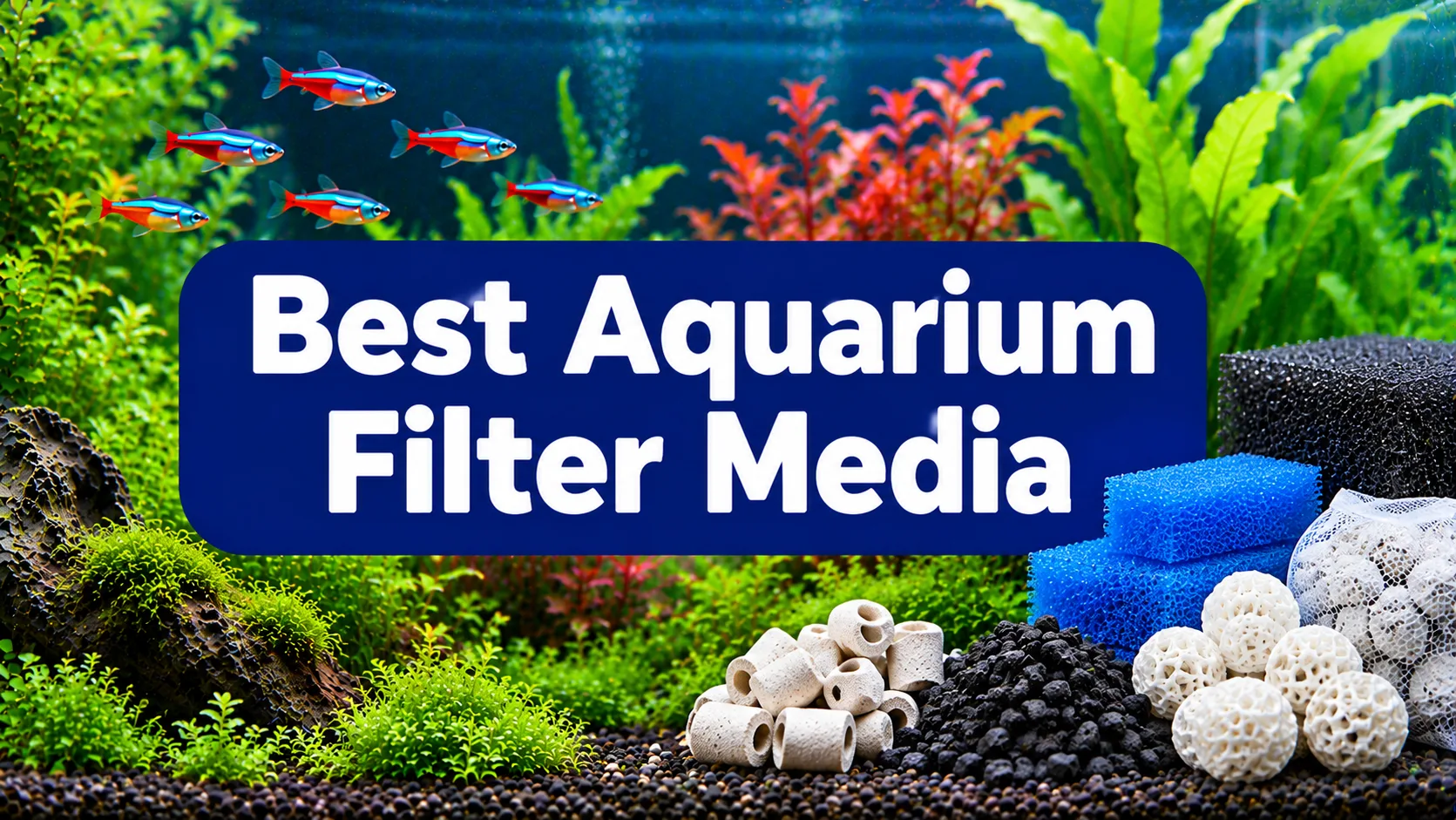
Your filter is only as good as what you put inside it. The box, the motor and the pipes just move water around. The real cleaning happens in the filter media: the sponges, ceramic rings, carbon and resins that catch dirt, grow good bacteria and pull out the things that make fish ill. Picking the best aquarium filter media can feel confusing. Shops sell dozens of products, and each one claims to be the best. In this guide, we explain the three types of media in plain words. Then we review six proven picks from Seachem, AquaEL and Juwel, so you can build a filter that keeps your water clear and your fish healthy.
Here is a quick look before the full reviews:
- Seachem Matrix: best biological media for most tanks
- AquaEL bio range: best value biological media
- Seachem Purigen: best for crystal-clear water
- Juwel Carbax: best activated carbon for Juwel filters
- Juwel Nitrax: best for lowering nitrate
- Juwel Phorax: best for fighting algae
Seachem Matrix
Seachem Matrix is one of the most trusted bio media in the hobby. It comes as small rock-like granules, each about 10 mm wide. They are made from a porous stone that will not break down or change your water.
Seachem says Matrix has over 700 m² of surface area per litre. Water flows easily through the outer pores, while the deep inner pores stay low in oxygen. This lets two kinds of bacteria live in the same media: ones that remove ammonia and nitrite, and ones that can break down nitrate.
Why we like it:
- Large surface area for good bacteria
- Helps lower nitrate as well as ammonia and nitrite
- Small granules fill odd-shaped filter baskets with no gaps
- Safe for freshwater and marine tanks
- Never wears out; it only needs a gentle rinse
How much to use: 250 mL for every 200 litres of tank water. No filter bag is needed in most setups.
Best for: canister filters, sumps and anyone who wants a “set and forget” bio media.
AquaEL Bio Range
AquaEL makes a full family of bio media, so you can match one to your filter and budget. Here are the three we rate most highly:
- AquaEL Bioceramax: porous ceramic cylinders with a filter area of 600 m² (Pro 600 version). It is ready to use straight from the box, with no rinsing. One 1-litre pack suits a tank of about 250 litres. It also comes in 1200 and 1600 versions.
- AquaEL PearlMAX Bio: sintered glass with a layered inside. As well as housing bacteria, it actively holds on to ammonium and nitrite. It does not change pH, KH or GH, so it suits shrimp and planted tanks.
- AquaEL NanoMAX Bio: ceramic balls about 30 mm wide, with around 2,000 m² of surface per litre. The large balls let water flow freely, so they suit big canister filters and sumps.
AquaEL advises rinsing these media only in old tank water, never under the tap. For Bioceramax, replace about one third every 6 to 12 months. For PearlMAX and NanoMAX, swap about half every 4 to 6 months. Never change it all at once, or you will lose your bacteria.
Best for: AquaEL filter owners and anyone after strong bio filtration at a lower price.
Seachem Purigen
Seachem Purigen is not carbon. It is a man-made resin of tiny white beads. It grabs organic waste from the water before that waste can break down into ammonia, nitrite and nitrate. The result is sparkling water that makes your fish and plants stand out.
The best part is that Purigen shows you when it is full. The beads slowly turn darker as they work. When that happens, you can recharge them with a bleach soak and use them again. So one pack lasts a very long time.
Why we like it:
- Makes water extremely clear
- Removes waste before it turns toxic
- Colour change tells you when to recharge
- Can be recharged and reused many times
- Has little effect on trace elements that plants need
Things to know: The beads are very small, so keep them in a fine mesh bag. After recharging, rinse well and soak in water with dechlorinator before putting it back. Always follow the steps on the pack. It comes in 100 mL, 250 mL and 500 mL sizes.
Best for: display tanks, aquascapes and anyone fighting yellow or hazy water.
Juwel Carbax
Juwel Carbax is a high-grade activated carbon made from hard coal. Juwel says it uses the whole grain, not just the outer layer, so it works harder than cheap carbon. It is sized to fit Juwel filters.
Carbax removes smells, cloudiness, yellow colour and harmful substances. It is also the go-to choice after you treat sick fish, because it pulls leftover medicine out of the water. It works in both freshwater and marine tanks.
Things to know: Carbon fills up over time and then stops working, so most fish keepers replace it every 3 to 4 weeks. Take carbon out while you dose medicine, or it will remove the treatment too. It comes in M, L and XL sizes.
Best for: Juwel tank owners who want fresh, clear water and an easy clean-up after medication.
Juwel Nitrax
Nitrate is the last step of the nitrogen cycle. It is far safer than ammonia, but high levels still stress fish and feed algae. Water changes are the main way to lower it, and Juwel Nitrax gives you extra help in between.
Nitrax works on a purely biological basis. It contains special microorganisms that help break down waste, and it actively reduces nitrate. Juwel says this helps hold back algae and keeps fish lively.
Things to know: Nitrax supports water changes but does not replace them. Test your water every week or two to see how well it is working. It comes in M, L and XL sizes for Juwel filters.
Best for: busy or heavily stocked tanks where nitrate creeps up fast.
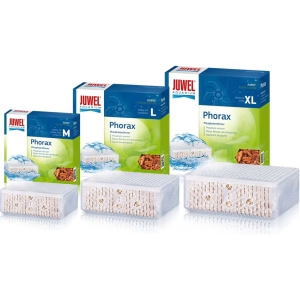
Juwel Phorax
Phosphate gets into your tank through fish food, and it does not break down on its own. Plants need only a tiny amount. Any extra can trigger green water, hair algae and slime.
Juwel Phorax uses an aluminium-based mineral that locks phosphate away. It turns dissolved phosphate into a solid that cannot dissolve back into the water. Juwel says each gram can bind up to 12 mg of phosphate. One of our customers calls it brilliant for stopping algae outbreaks.
Things to know: Phorax tackles one cause of algae, not all of them. Too much light and overfeeding matter too. In planted tanks that get fertiliser, use it with care, because plants still need some phosphate. Replace it when your test shows phosphate rising again. It suits freshwater and marine tanks, in M, L and XL sizes.
Best for: tanks with ongoing algae problems, especially fish-only tanks.
What Is Aquarium Filter Media?
Filter media is any material inside your filter that cleans the water as it flows through. Every filter uses it, from a small internal filter to a large external canister. Fish make waste all day long. Leftover food and dead plant leaves also rot in the tank. All of this turns into ammonia, which is toxic to fish even in small amounts. Good filter media catches the solid dirt, turns ammonia into safer compounds and can even polish the water until it sparkles.
The Three Types of Filter Media
Most filters hold three kinds of media, and each one does a different job. Every tank needs the first two. The third is a useful extra for fixing specific problems.
Mechanical Filter Media
Mechanical filter media works like a sieve. It traps solid bits such as fish waste, uneaten food and plant pieces before they reach the rest of the filter. Common examples are sponges, foam pads and filter floss, which is also called filter wool.
Sponges are graded by PPI, which means pores per inch. A low number, like 10 PPI, has big holes and catches large dirt. A higher number, like 30 PPI, has small holes and catches fine dirt. Many filters use a coarse sponge first and a fine one after it. You can find replacement sponges in our filter pads range.
Biological Filter Media
Biological filter media is the most important part of any filter. It gives a home to good bacteria. These bacteria eat toxic ammonia and turn it into nitrite, then into nitrate, which is far less harmful. This process is called the nitrogen cycle. Good bio media is full of tiny holes, and more holes mean more room for bacteria. Ceramic rings, sintered glass and porous stone are the most common types. Once the bacteria settle in, this media should stay in your filter for many months or even years.
Chemical Filter Media
Chemical filter media removes things you cannot see. Activated carbon takes out smells, yellow colour and leftover medicine. Resins like Purigen grab waste before it rots. Other media can lower phosphate or nitrate, which helps stop algae.
Most tanks do not need chemical media all the time. But it is a smart tool when your water looks yellow, smells bad or keeps growing algae. Unlike bio media, most chemical media wears out and needs replacing.
What Order Should Filter Media Go In?
The order matters. Water should always pass through mechanical media first, so dirt cannot clog the rest of the filter. Follow this simple order:
- Mechanical media: coarse sponge first, then fine sponge or floss
- Biological media: Matrix, Bioceramax, PearlMAX or NanoMAX
- Chemical media: Purigen, Carbax, Nitrax or Phorax
AquaEL recommends this same order. Putting chemical media last means it gets the cleanest water, so it lasts longer. If your filter has only one or two spaces, fill them with mechanical and biological media first.
How to Clean Filter Media Without Killing Good Bacteria
Never wash bio media or sponges under the tap. Tap water contains chlorine, which kills the good bacteria. Instead, take a bucket of old tank water during your water change. Then gently squeeze or swish the media in it.
Do not clean everything on the same day. Clean the sponges one week and rinse the bio media a few weeks later. Never replace all your bio media at once. Keeping some old, “seasoned” media means your bacteria stay strong and your fish stay safe.
How to Choose the Best Aquarium Filter Media for Your Tank
Ask yourself four simple questions:
- What filter do I have? Juwel internal filters suit Juwel’s ready-sized media. Canisters and sumps work well with loose media like Matrix or NanoMAX.
- How big is my tank? Check the dose on each product and buy enough to treat your full volume.
- What problem am I solving? For cloudy or yellow water, use Purigen or Carbax. For algae, try Phorax. For high nitrate, use Nitrax alongside water changes.
- Do I keep shrimp or plants? Choose media that will not change pH or hardness, such as Matrix or PearlMAX.
One last tip: surface area numbers come from the makers, and each brand measures them in its own way. So do not compare them like for like. A well-kept filter with a good sponge and any quality bio media will serve your fish well.
Best Aquarium Filter Media Compared
| Product | Media type | Main job | How long it lasts | Best for |
|---|---|---|---|---|
| Seachem Matrix | Biological | Homes bacteria; lowers ammonia, nitrite and nitrate | Years; rinse only | Canisters and sumps |
| AquaEL Bioceramax | Biological | Ceramic home for bacteria, 600 m² area | Replace 1/3 every 6 to 12 months | Value and AquaEL filters |
| AquaEL PearlMAX Bio | Biological | Sintered glass; holds ammonium and nitrite | Replace half every 4 to 6 months | Shrimp and planted tanks |
| AquaEL NanoMAX Bio | Biological | 30 mm balls, about 2,000 m² per litre | Replace half every 4 to 6 months | Large canisters and sumps |
| Seachem Purigen | Chemical | Removes organic waste; clears water | Recharge with bleach and reuse | Crystal-clear display tanks |
| Juwel Carbax | Chemical | Removes smells, colour and medicine | Replace every 3 to 4 weeks | Juwel filters, after treatment |
| Juwel Nitrax | Biological nitrate remover | Lowers nitrate | Replace when nitrate rises | Heavily stocked tanks |
| Juwel Phorax | Chemical | Binds phosphate, up to 12 mg per gram | Replace when phosphate rises | Algae-prone tanks |
Frequently Asked Questions
What is the best aquarium filter media for beginners?
For most beginners, a good sponge plus Seachem Matrix or AquaEL Bioceramax is the best start. The sponge catches dirt, and the bio media grows the bacteria your fish need. Both are easy to use and last a long time. If you own a Juwel tank, keep Juwel’s own sponges and add Carbax or Purigen later if the water looks dull.
How often should I replace filter media?
It depends on the type. Rinse sponges every few weeks and replace them when they start to fall apart. Bio media lasts for months or years, so replace only part of it at a time. Chemical media wears out fastest. Carbon usually needs changing every 3 to 4 weeks, while Purigen can be recharged.
Can I use Purigen and activated carbon together?
Yes. They do slightly different jobs. Purigen removes organic waste, while carbon is better at removing smells, colour and medicine. Many fish keepers run Purigen all the time and add carbon only after treating sick fish. Just remove both while you dose any medicine.
Is more surface area always better?
Not always. More surface area gives bacteria more room, but water flow and regular cleaning matter just as much. Brands also measure surface area in different ways, so the numbers are not always comparable. Pick a trusted brand, use the right amount and keep it clean.
Do I need chemical filter media?
Not in every tank. Mechanical and biological filter media are the must-haves. Chemical filter media is a helpful extra for problems like yellow water, bad smells, algae or leftover medicine. Add it when you need it, and remove it when the job is done.
Conclusion
The best aquarium filter media is not one magic product. It is the right mix of mechanical, biological and chemical media working together. Start with a good sponge to catch dirt. Add strong bio media like Seachem Matrix or the AquaEL range to grow good bacteria. Then use Purigen, Carbax, Nitrax or Phorax to fix specific problems such as cloudy water, high nitrate or algae. Look after your media gently. Rinse it in old tank water and never replace it all at once. Do that, and your filter will reward you with clear water and healthy, happy fish all year round. Ready to upgrade? Browse our full range of biological filter media and chemical filter media at Bluviva and build your perfect filter today.