Have you ever looked into your fish tank and spotted tiny white threads wiggling around in the gravel or floating in the water? If so, you have probably seen detritus worms. These little creatures can be alarming when you first notice them. You might worry that your fish are in danger or that something is terribly wrong with your tank. But here is the good news: detritus worms are usually nothing to panic about. In fact, they are a natural part of almost every aquarium ecosystem. Nearly every established fish tank contains detritus worms, whether the owner knows it or not. They live in the substrate (the gravel or sand at the bottom of your tank) and help break down waste material.
In this blog we will tell you everything you need to know about detritus worms. We will cover what they are, the different types, whether they are harmful or helpful, how to identify them, and what to do if you have too many. By the end, you will understand these tiny worms and know exactly how to manage them in your aquarium.
What Are Detritus Worms?
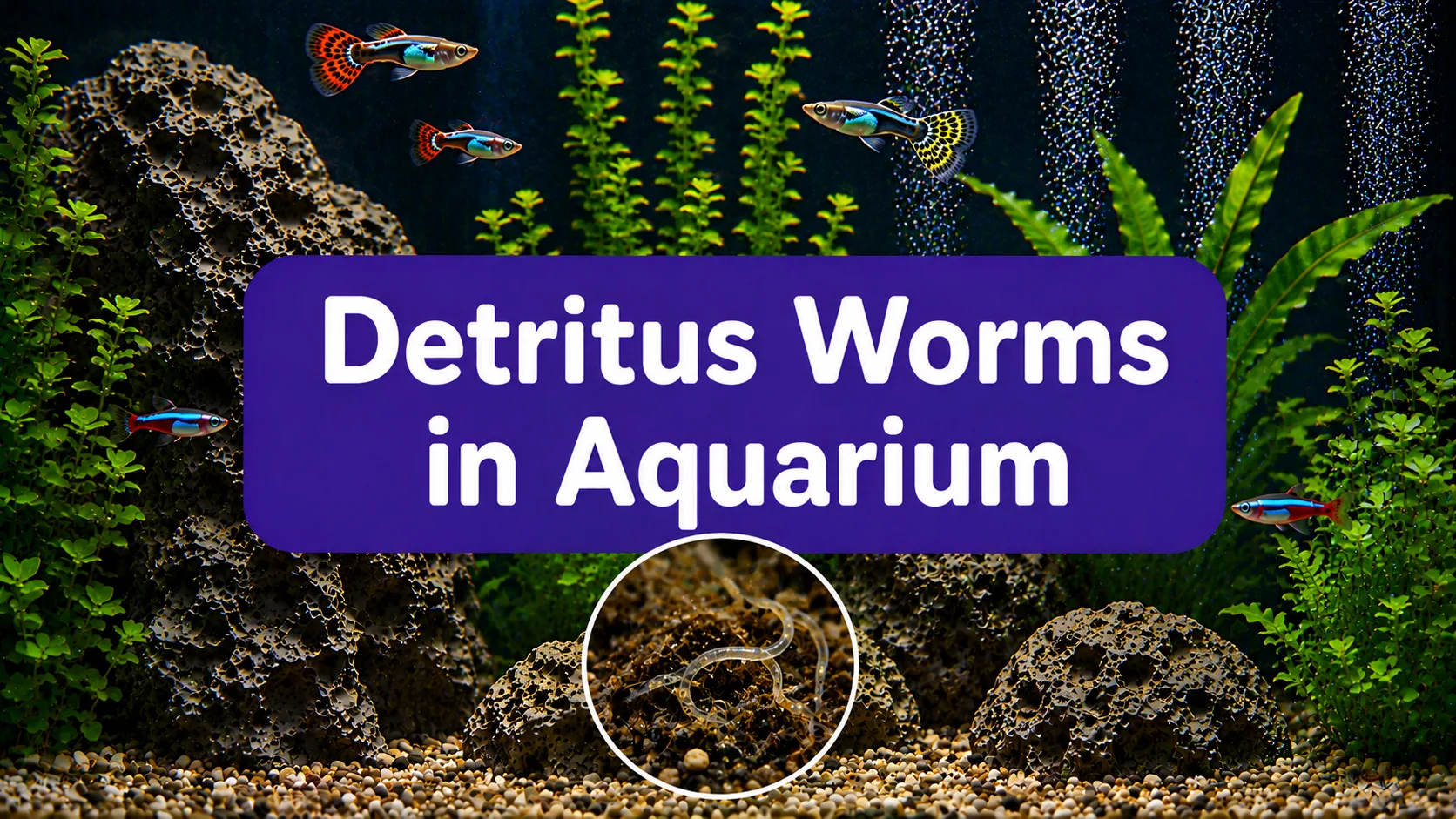
Detritus worms are small, thin, worm-like creatures that live in freshwater aquariums. The name “detritus” comes from the word for dead organic matter, things like fish waste, uneaten food, and decaying plant leaves. These worms eat exactly that: the waste and debris that collect in your tank.
These worms belong to a group called annelids, which are segmented worms. They are close relatives of earthworms you might find in your garden. Most detritus worms found in aquariums measure between 5 to 25 millimeters long, though some can grow up to 30 millimeters. They are extremely thin, like fine threads or pieces of hair, and are usually white, translucent, or very pale pink in color.
Under a magnifying glass, you can see that detritus worms have no distinct head. They taper to a fine point at both ends. They move with a wriggling, snake-like motion that is quite different from the smooth gliding of other types of worms. They live mainly in the substrate, but you might also see them on the glass, in filter sponges, or swimming in the water.
It is important to know that detritus worms are not parasites. They do not attach to, feed on, or irritate fish, shrimp, snails, or plants in any way. They are simply nature’s cleanup crew, doing the important job of breaking down waste.
Types of Detritus Worms
Naididae Family Worms
The Naididae family is one of the main groups of worms that aquarists call detritus worms. This family includes the worms that were formerly known as Tubificidae. These worms are also called sludge worms in some contexts.
Naididae worms are very common in freshwater aquariums. They are small, long, white worms that wiggle about in the substrate or the filter. They move in a snake-like motion, which makes them easy to spot when they are active.
In the wild, these worms are key members of the communities that live at the bottom of freshwater bodies. In your aquarium, they perform the same important function: eating waste and helping to keep the tank clean.
Tubifex Worms
Tubifex worms are another common type of detritus worm. The most well-known species is Tubifex tubifex. These worms are detritivores, meaning they eat detritus like fish waste, uneaten food, and dead plant material.
Tubifex worms live in the substrate and help aerate it while they eat. As they consume waste, they break it down into castings that are more nutrient-dense and easier for plants to use. This means they can actually help your aquarium plants grow better. Many fishkeepers actually buy live Tubifex worms as food for their fish. So if you have them in your tank naturally, they can serve as a free, nutritious snack for your fish.
Nematodes (Roundworms)
Some people also call certain nematodes detritus worms. Nematodes are extremely thin, even thinner than other detritus worms, and move in a stiff S-shaped pattern. They are also harmless detritivores that eat decaying organic matter.
Free-living nematodes are not parasites. They do not harm fish or other tank inhabitants. They are just another part of the natural ecosystem of your aquarium.
Bristle Worms (Saltwater)
If you have a saltwater aquarium, you might encounter bristle worms. These are true annelid worms, just like tubifex and earthworms. They are saltwater detritus worms that feed on decaying matter in deep crevices. They are generally harmless to tank inhabitants, though some species can grow quite large.
Interesting Facts About Detritus Worms
Here are some fascinating facts about these tiny creatures that you might not know:
They are in almost every tank. Nearly every established aquarium contains detritus worms. You just usually do not see them because they stay hidden in the substrate. It is only when their population grows large that they become visible.
They are nature’s recyclers. Detritus worms help break down waste material and contribute to nutrient cycling within the substrate. They turn fish waste and dead plant matter into nutrients that plants can use.
They can swim. While detritus worms usually live in the gravel, they can swim when they need to. You might see them swimming jerkily through the water column, especially when they are looking for more oxygen.
They come out when oxygen is low. When the oxygen level in the substrate drops, detritus worms will migrate toward the surface of the water to find higher concentrations of oxygen. This is why you often see them on the glass or swimming near the top of the tank.
Their population can explode quickly. Under the right conditions, plenty of food and warm temperatures, detritus worm populations can increase rapidly. A small number can turn into a visible infestation in just a few weeks.
Fish love to eat them. Many fish consider detritus worms a tasty snack. Bettas, tetras, corydoras, guppies, and most other small fish will eagerly eat any detritus worms they encounter.
They are not planaria. This is one of the most important facts. Detritus worms are often confused with planaria, but they are completely different. Planaria are flatworms with triangular heads, and they can be dangerous to shrimp and baby fish. Detritus worms are round, thread-like, and harmless.
Are Detritus Worms Harmful or Good?
The Short Answer
Detritus worms are not harmful to fish, shrimp, snails, or plants. They are beneficial in moderate numbers. They help clean your tank by eating waste and debris.
Why They Are Good
Detritus worms play a valuable role in your aquarium ecosystem. Here is why they are actually helpful:
- They clean up waste. By consuming decomposing organic matter in the substrate, detritus worms help break down waste into smaller particles. This makes it easier for beneficial bacteria to process the waste efficiently.
- They are part of the natural waste management system. Think of detritus worms as your tank’s janitors. They help break down excess waste, which can actually help prevent ammonia spikes.
- They provide free food for fish. Many fish love to eat detritus worms. In a tank with active fish, the worm population is naturally controlled through predation.
- They help plants grow. As detritus worms break down waste, they release nutrients that plants can use. This can contribute to a healthier, more vibrant planted tank.
- The Real Concern
While the worms themselves are not dangerous, a large population of detritus worms can be a warning sign. When you see a lot of worms, it usually means there is too much organic waste in your tank.
The real threat is not the worms but what their sudden visibility tells you about your tank conditions. A population explosion can indicate:
- Overfeeding — you are putting more food in the tank than your fish can eat
- Poor water quality — high ammonia, nitrite, or nitrate levels
- Low oxygen levels — especially in the substrate
- Infrequent cleaning — not vacuuming the gravel or changing water often enough
- A dead tank mate — a fish or snail that died and is decomposing in the tank
These conditions can stress your fish and weaken their immune systems. For sensitive species like crystal red shrimp or delicate nano fish, the water quality deterioration that accompanies a worm bloom is the real concern.
Detritus Worms and Shrimp
Many shrimp keepers worry about detritus worms harming their shrimp. The good news is that detritus worms are not directly harmful to healthy shrimp. They do not prey on shrimp or transmit diseases.
However, a large population of detritus worms indicates poor water quality, which can indirectly harm your shrimp. Shrimp are sensitive to water conditions, so if there is too much waste in the tank, it can stress or even kill them.
The real danger to shrimp comes from planaria, not detritus worms. Planaria are flatworms with triangular heads that can hunt and eat shrimp. So it is important to correctly identify which type of worm you have.
How to Identify Detritus Worms
Correct identification is important because it determines whether you need to take action. Here is how to tell if you have detritus worms:
| Feature | Detritus Worms |
|---|---|
| Size | Typically 5 to 20 mm, sometimes up to 30 mm |
| Color | White, translucent, or very pale pink |
| Body shape | Extremely thin, thread-like, round cross-section |
| Head | No distinct head, tapers to a fine point at both ends |
| Movement | Wriggling, writhing, snake-like motion |
| Location | Primarily in substrate; also on glass, filter sponges, or swimming |
The most important characteristic is their extreme thinness, detritus worms look like fine threads or hair. They have no visible eyes, no distinct head, and no segments that you can see with your naked eye.
Detritus Worms vs Planaria vs Nematodes
It is easy to confuse different types of worms. Here is a quick comparison:
Detritus Worms:
- Thin, round in cross-section
- Wriggle actively
- No distinct head
- Harmless
Planaria:
- Flat and wider
- Distinct triangular head with visible eyespots
- Glide smoothly
- Predatory, dangerous in shrimp tanks
Nematodes:
- Extremely thin (hair-like)
- Move in a stiff S-shaped pattern
- Also harmless detritivores
If your worms lack an arrow-shaped head and simply undulate through the water, they are almost certainly detritus worms or nematodes, neither of which threatens your livestock.
What to Do About Detritus Worms
If you have a few detritus worms in your tank, you do not need to do anything. They are a normal and healthy part of the aquarium ecosystem. However, if you have a large population of worms that is becoming unsightly, or if you are concerned about what their presence indicates, here are the steps you can take.
Reduce Feeding
Overfeeding is the single most common cause of detritus worm explosions. If you are feeding more than your fish consume within 2 to 3 minutes, excess food is reaching the bottom and fueling the worm population.
Cut back on how much and how often you feed your fish. Feed only what your fish can consume in two to three minutes and remove any uneaten portions promptly.
Vacuum the Substrate
A thorough gravel vacuum is the fastest way to remove detritus worms physically. During your next water change, use an aquarium gravel vacuum to suck up the worms and any waste out of the substrate.
Work in sections, targeting all substrate areas and particularly around decorations and plant roots where detritus accumulates. Hover the siphon 1 to 2 centimeters into the substrate surface to extract worms without disturbing beneficial bacteria deep below.
Remove 30 to 40 percent of the water at the same time. In planted tanks with a deep substrate layer, use a gentle siphon rather than digging deeply, you do not want to release harmful gases from anaerobic pockets.
Clean Your Filter
Detritus worms often live in filter media as well. Clean your filter media in old tank water (never tap water, which kills beneficial bacteria). Squeeze out sponges and rinse ceramic rings to dislodge accumulated sludge.
Increase Water Changes
Perform regular water changes to remove excess nutrients and organic waste. Weekly or bi-weekly water changes of 25 to 50 percent will help prevent the buildup of waste that detritus worms feed on.
Add Fish That Eat Detritus Worms
Certain fish are natural predators of detritus worms and can help keep the population under control. Bettas, gouramis, small tetras, corydoras, guppies, and goldfish will readily eat these worms.
If you have a shrimp tank, be careful about adding fish that might also eat your shrimp.
Improve Aeration
Low oxygen levels can cause detritus worms to leave the substrate and become more visible. Adding an air stone can increase oxygen levels in the water, which benefits fish and reduces the conditions that detritus worms prefer.
What NOT to Do
Do not use chemicals or medications unless it is an absolute last resort. Most medications that kill worms are also harmful to shrimp, snails, and beneficial bacteria. They can disrupt the delicate balance of your aquarium ecosystem. Focus on improving tank hygiene instead of reaching for chemicals. The natural methods described above are safer and more effective in the long run.
Prevention: Keeping Detritus Worms Under Control
The best way to deal with detritus worms is to prevent them from taking over in the first place. Here are some prevention tips:
Feed appropriately. Only provide the amount of food your fish can consume in a few minutes. Remove any uneaten food after feeding.
Vacuum regularly. Perform weekly or bi-weekly gravel vacuuming to remove accumulated detritus.
Do regular water changes. Change 25 percent of the water weekly to maintain good water quality.
Maintain your filter. Clean your filter regularly according to the manufacturer’s instructions.
Remove dead plant matter. Promptly remove any decaying plant material from the tank.
Check for dead tank mates. If a fish or snail dies, remove it as soon as possible to prevent it from decomposing and feeding worms.
Detritus Worms vs Other Aquarium Worms
| Feature | Detritus Worms | Planaria | Nematodes | Camallanus Worms |
|---|---|---|---|---|
| Shape | Thin, round, thread-like | Flat, wider | Extremely thin, hair-like | Thin, red, protrudes from fish |
| Head | No distinct head, tapers at both ends | Triangular head with eyespots | No distinct head | No distinct head |
| Movement | Wriggling, snake-like | Smooth gliding | Stiff S-shaped pattern | Protrudes from fish |
| Color | White, translucent, pale pink | White or brown | White or translucent | Red |
| Location | Substrate, glass, filter | Substrate, glass | Substrate, water column | Inside fish, protruding from vent |
| Harmful? | No, beneficial | Yes, predatory, dangerous to shrimp and fry | No, harmless detritivores | Yes, internal parasite |
| What to do | Reduce feeding, vacuum substrate | Remove manually, use traps, consider medication | Same as detritus worms | Medication required (levamisole) |
The Bottom Line
Detritus worms are nothing to fear. These tiny, thread-like creatures are a natural and normal part of almost every aquarium ecosystem. They play a valuable role as nature’s cleanup crew, breaking down waste and helping to keep your tank clean. The key thing to remember is that detritus worms themselves are completely harmless to fish, shrimp, snails, and plants. They do not bite, infect, or attach to your aquarium inhabitants. In fact, many fish consider them a tasty, protein-rich snack. However, a sudden explosion of detritus worms is a signal that something is off in your tank. It usually means you are overfeeding, not cleaning enough, or that water quality has declined. The worms are not the problem, they are just a symptom of the real issue.
The solution is simple: feed less, vacuum more, change water regularly, and maintain your filter. These steps will reduce the worm population naturally without the need for harsh chemicals that could harm your tank’s ecosystem. So the next time you see tiny white threads wiggling in your aquarium, do not panic. Take a breath, check your feeding and cleaning habits, and make the necessary adjustments. Your tank, and its tiny worm inhabitants, will thank you.
Remember: a few detritus worms are a sign of a healthy, balanced aquarium. It is only when they take over that you need to take action. And now you know exactly what to do.