A Complete Guide for Beginners and Aquarium Enthusiasts
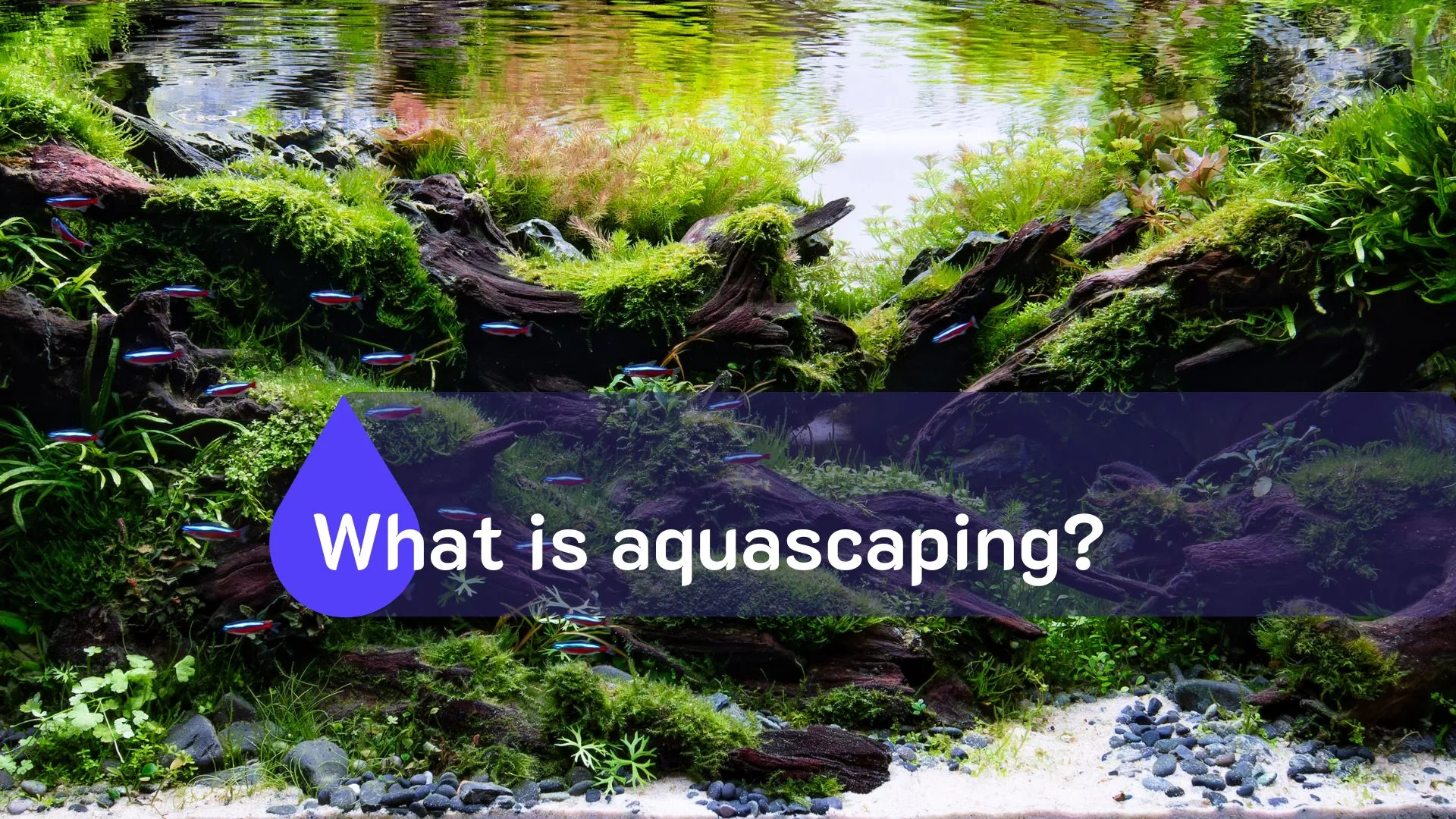
Aquascaping is more than just keeping fish in an aquarium it is the art of designing and arranging aquatic plants, rocks, driftwood, and substrate to create a natural underwater landscape. Often compared to gardening or even landscape architecture, aquascaping combines creativity, science, and patience.
In recent years, aquascaping has become one of the fastest growing trends in the aquarium hobby. From lush underwater jungles to minimalist Iwagumi layouts, aquascaping allows you to bring a piece of nature into your home or office while also providing a healthy environment for your fish and shrimp.
Whether you are a beginner or an advanced aquarist, understanding the principles of aquascaping will help you create a tank that is not only beautiful but also stable and easy to maintain.
The Origins of Aquascaping
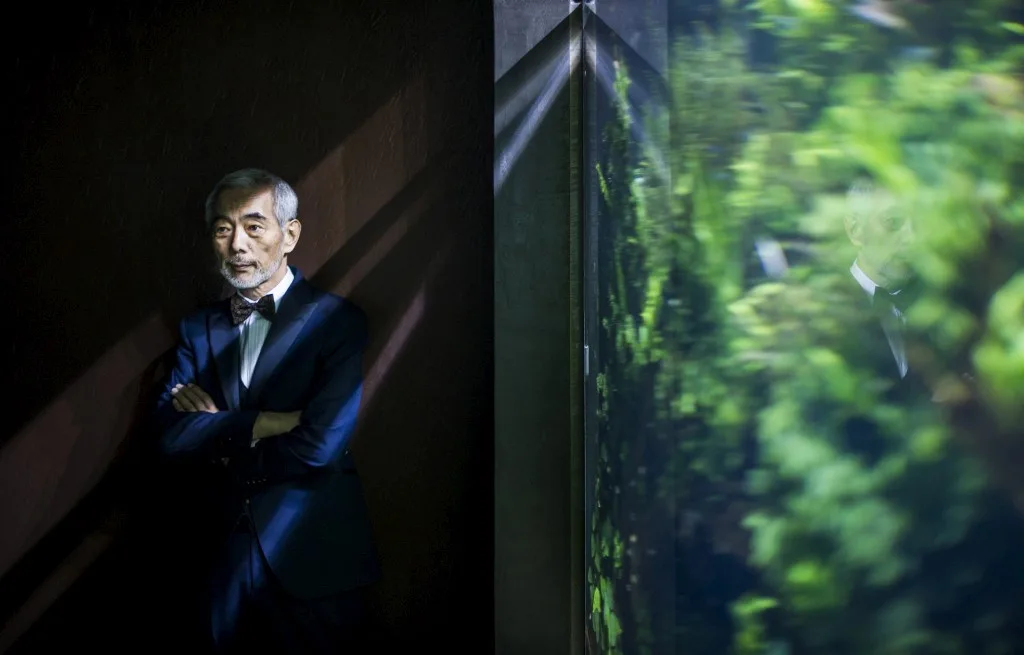
The term aquascaping gained popularity thanks to Takashi Amano, a Japanese photographer and aquarist who pioneered the “Nature Aquarium” style in the 1990s. Inspired by Japanese gardening traditions and natural landscapes, Amano introduced aquascaping as an art form, focusing on harmony, balance, and the beauty of nature.
Today, aquascaping is recognised worldwide, with international competitions such as the International Aquatic Plants Layout Contest (IAPLC), Korea International Aquascaping Contest (KIAC), and others, showcasing some of the most breathtaking underwater creations.
Popular Styles of Aquascaping
There are many styles of aquascaping, each with its own unique aesthetic. Some of the most popular include:
1. Nature Aquarium
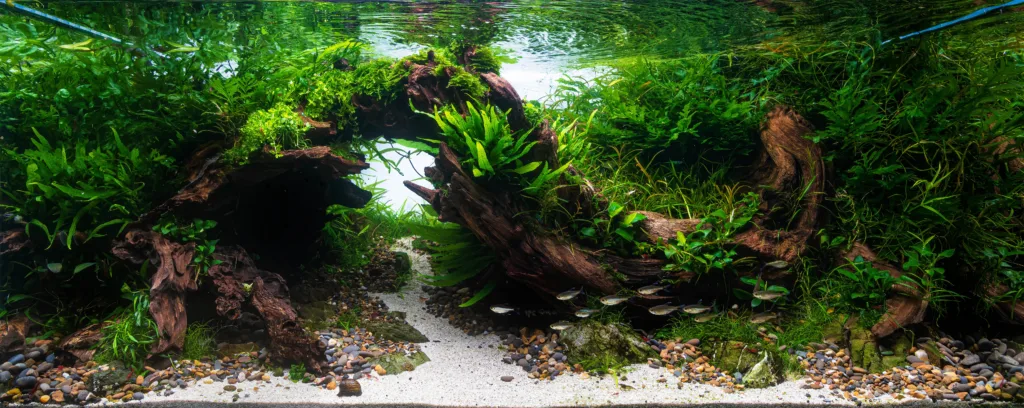
Inspired by forests, mountains, or rivers, this style uses plants, rocks, and driftwood to mimic natural scenery. It often has a wild but balanced appearance, promoting biodiversity.
2. Iwagumi Layout
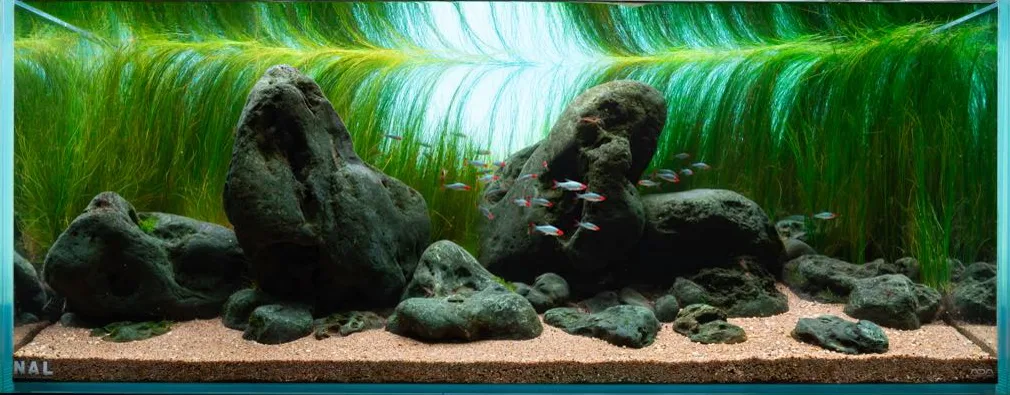
This minimalist Japanese style focuses on stones as the main design element. Typically, three or five rocks are arranged in a way that symbolises simplicity, balance, and strength, often with carpeting plants covering the substrate.
3. Jungle Style
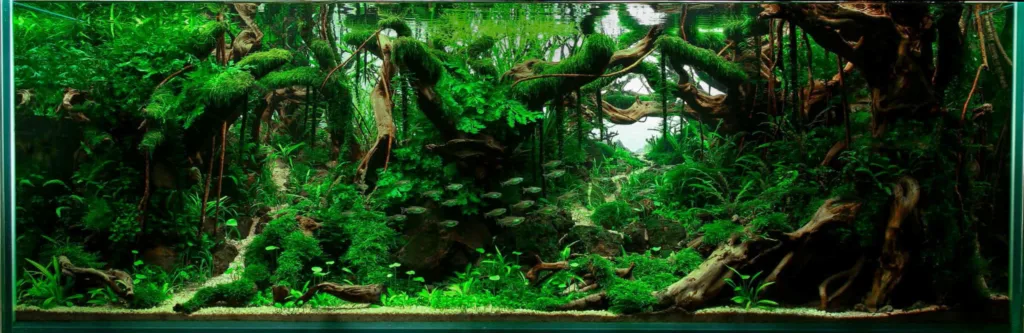
Lush, dense, and slightly untamed, the jungle style is perfect for aquarists who love a more natural scene. Tall plants and driftwood are used to create depth and mystery.
4. Ryoboku (Driftwood Style)
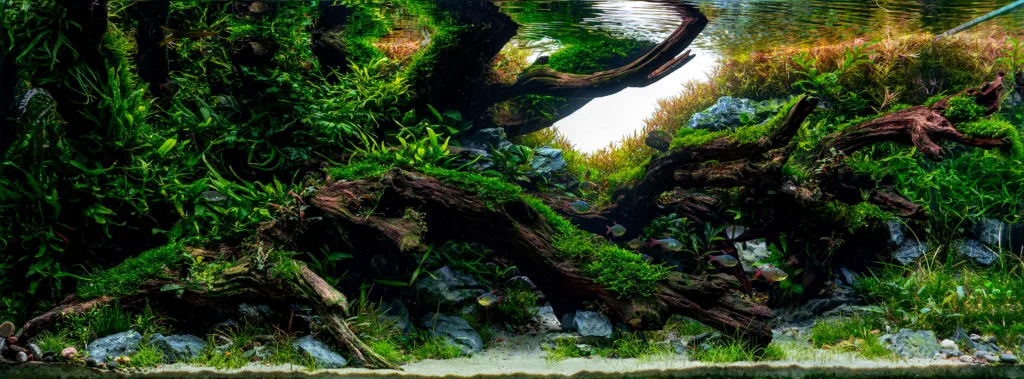
The Ryoboku style highlights driftwood as the main structural element of the aquascape, often combined with stones and aquatic plants to create a sense of natural riverbanks or forest roots. This style offers endless possibilities for creativity, as twisted branches and roots can be arranged to provide dramatic depth, perspective, and a highly natural feel.
Essential Elements of Aquascaping
Creating a stunning aquascape requires more than just filling a tank with plants and decorations. These are the key elements to consider:
- Aquarium Tank – The canvas for your aquascape. Choose a clear glass aquarium to enhance visibility.
- Lighting – High-quality aquarium lighting is crucial for plant growth and color vibrancy.
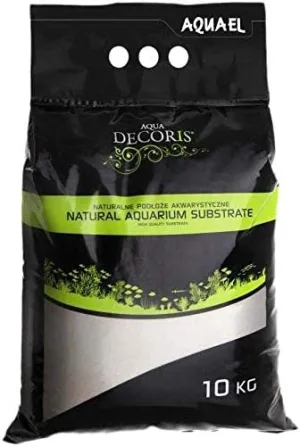
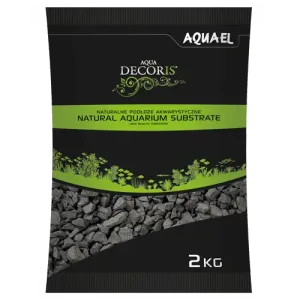
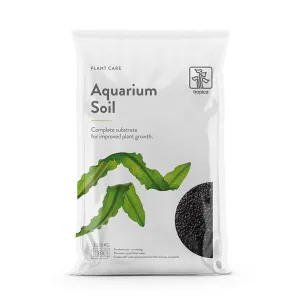
- Substrate – Nutrient-rich soil or gravel supports root growth and provides a natural appearance.
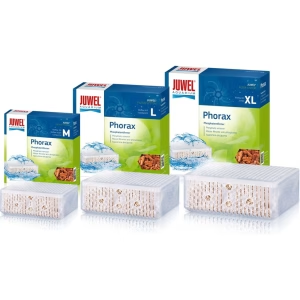
- Filtration – A reliable filter ensures clean, healthy water for both plants and fish.
- CO₂ Injection – Many aquascapers use CO₂ systems to boost plant growth and achieve lush, green carpets.
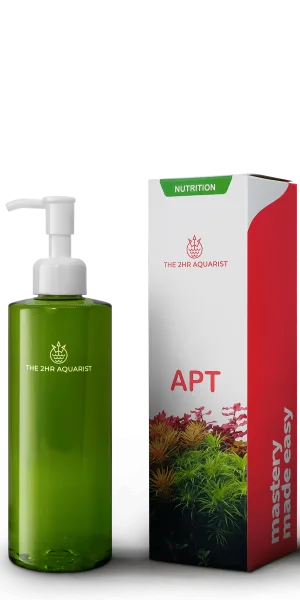
- Fertilisation – Liquid and root fertilisers provide essential nutrients for aquatic plants.
- Hardscape – Rocks, stones, and driftwood create structure and focal points in the layout.
Why is Aquascaping So Popular?
Aquascaping has gained worldwide popularity for several reasons:
- Stress Relief: Watching a well designed aquarium has been proven to reduce stress and promote relaxation.
- Creativity: Each aquascape is unique, giving aquarists the freedom to express their artistic vision.
- Nature at Home: An aquascape brings a piece of nature indoors, allowing you to enjoy green spaces even in urban settings.
- Community: The aquascaping hobby has a vibrant online community, with forums, social media groups, and competitions inspiring aquarists worldwide.
Tips for Beginners in Aquascaping
If you are just starting, keep these beginner tips in mind:
- Start Small – Begin with a medium sized aquarium (around 60L) to balance stability and manageability.
- Plan Your Layout – Sketch your design before starting to avoid clutter and ensure balance.
- Choose Easy Plants – Go for low demanding plants such as Java Fern, Anubias, and Cryptocoryne before moving to more demanding plants.
- Balance Fish and Plants – Select species that complement your aquascape without disturbing the layout.
- Patience is Key – Plants need time to root and grow. Avoid rushing the process.
Conclusion: Aquascaping is for Everyone
Aquascaping is a hobby that blends art, science, and nature. It allows you to design a living ecosystem that not only looks beautiful but also promotes the well being of aquatic life. Whether you dream with a minimalist Iwagumi scape, or a wild jungle tank, the possibilities are endless.
At Bluviva, we provide everything you need to start your aquascaping journey from aquariums and lighting systems to CO₂ kits and fish care essentials.
Bring nature into your home today and create your own underwater masterpiece!