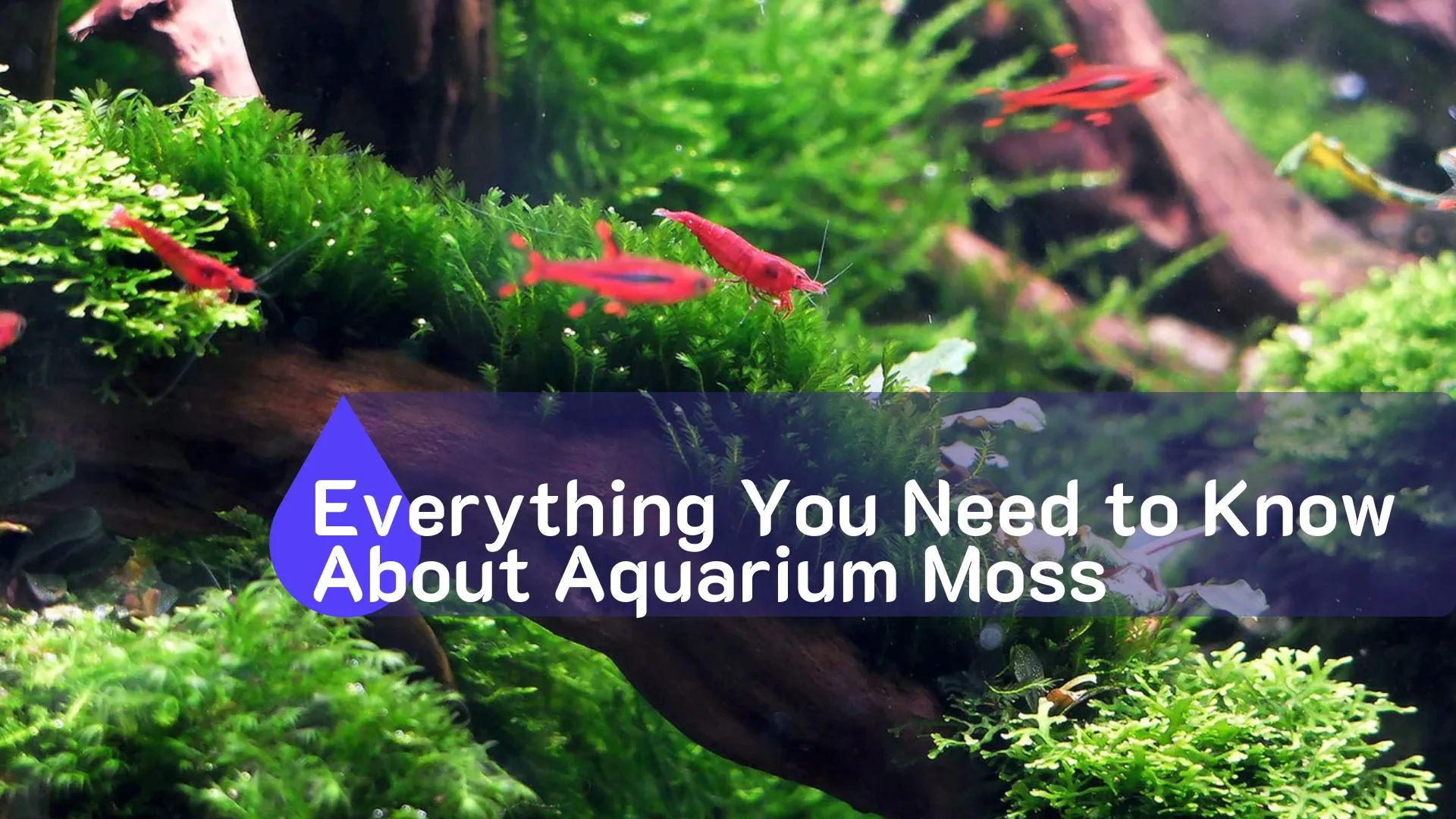
Aquarium moss is more than just a splash of green; it’s a transformative element that brings a touch of wild nature, balance, and vitality to any fish tank. Whether you’re a professional aquascaper or a first-time enthusiast, the versatility and beauty of aquatic mosses offer a world of creative possibilities. At Bluviva.com, we are passionate about helping you create thriving aquatic ecosystems. In this complete guide, we’ll explore the most popular aquarium moss types on the market, their fascinating growth patterns, and how you can use them to create breathtaking underwater landscapes.
Why Add Moss to Your Aquarium? The Experts Agree
Before we dive into the different types of moss, it’s important to understand the multiple benefits they offer. Beyond their undeniable aesthetic appeal, these plants play a crucial role in maintaining a healthy aquatic environment.
Moss is one of the most versatile and beneficial additions to any aquarium. Whether you are setting up a planted tank, a shrimp habitat, or a stunning aquascape, aquatic moss offers numerous advantages.
Aquarium mosses act as natural filters, absorbing nitrates and other unwanted compounds from the water. This helps maintain water quality and prevent algae outbreaks. Furthermore, their dense and intricate structure offers the perfect hiding place for fish fry and shrimp, increasing their survival rates and providing a safe environment for them to thrive.
The Most Popular Types of Aquarium Moss: A Detailed Look
A wide range of mosses is available for the aquarium hobby, each with its unique characteristics. Understanding their specific traits is the first step in choosing the ideal moss for your aquascaping project.
1. Java Moss (Taxiphyllum barbieri)

The perfect choice for beginners, Java Moss is hardy and adaptable to a wide range of water conditions and lighting, making it extremely easy to care for.
- Growth Pattern: Java Moss has an irregular, creeping growth pattern, forming dense, dark green clumps. It easily attaches to almost any surface.
- Best Uses: Extremely versatile. It can be used to create lush moss carpets, cover equipment, or simply be left to float.
2. Christmas Moss (Vesicularia montagnei)
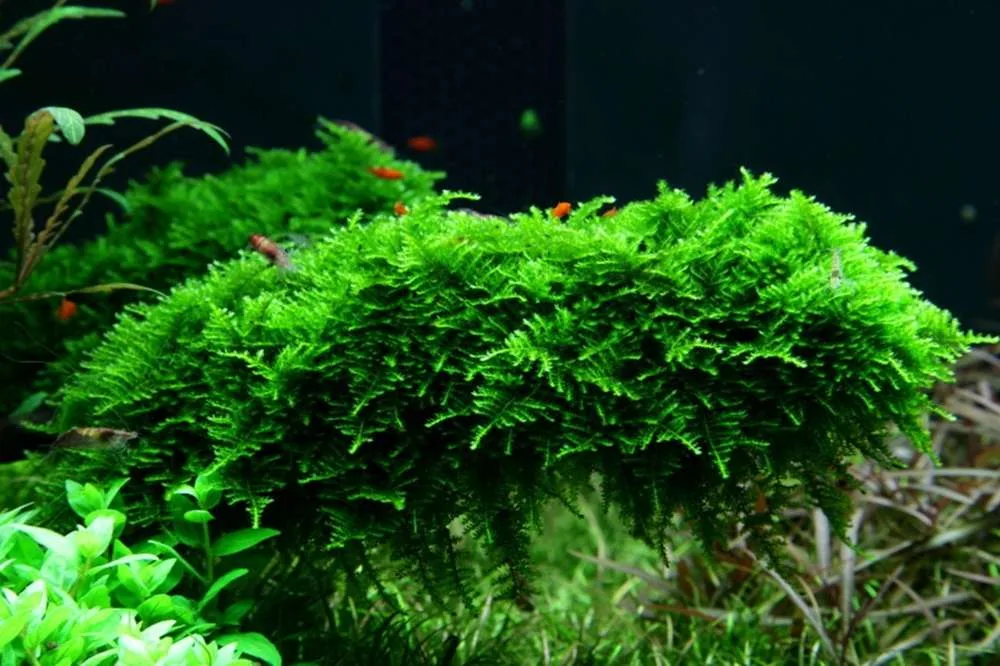
This moss gets its name from its growth structure, which resembles the fronds of a Christmas tree, giving it a more structured and distinct look.
- Growth Pattern: Christmas Moss grows in a more orderly fashion than Java Moss, with fronds that branch out in a triangular, drooping shape.
- Best Uses: Ideal for creating moss walls, carpeting the substrate, or adding layered texture to driftwood and rocks.
3. Flame Moss (Taxiphyllum sp. ‘Flame’)
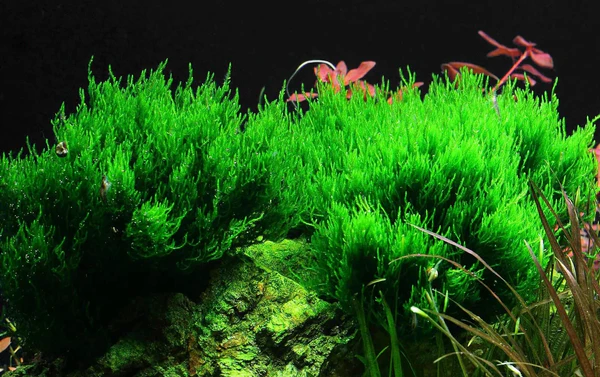
This stunning moss stands out for its unique and dramatic vertical growth pattern, which lives up to its name.
- Growth Pattern: Unlike most mosses, Flame Moss grows vertically, with fronds that twist upwards in a spiral, resembling green flames.
- Best Uses: Perfect for creating a focal point. When attached to small rocks or driftwood, it creates the illusion of a submerged, green bonfire.
4. Weeping Moss (Vesicularia ferriei ‘Weeping’)

With its graceful, cascading appearance, Weeping Moss is ideal for adding a touch of softness and movement to your aquarium.
- Growth Pattern: This moss has a distinct “weeping” growth habit, with its fronds curving downwards, similar to a weeping willow tree.
- Best Uses: Best utilized when attached to elevated driftwood or rocks, allowing its fronds to hang down and create a beautiful waterfall effect.
5. Taiwan Moss (Taxiphyllum alternans)
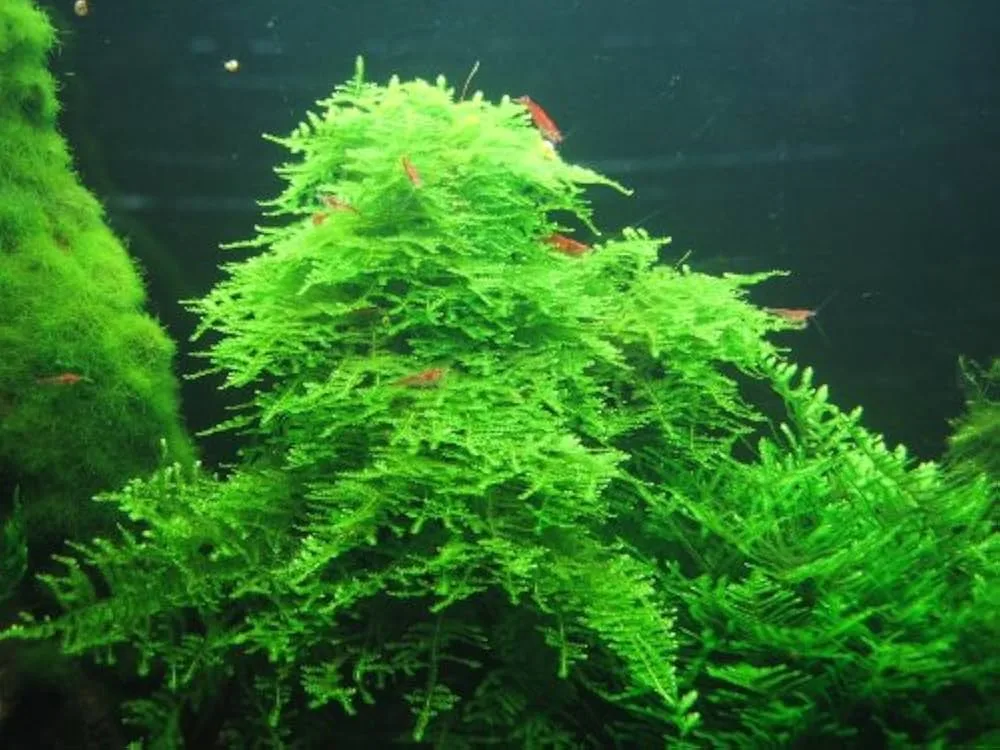
Similar to Christmas Moss but with a finer, more delicate texture, Taiwan Moss is an excellent alternative for creating detailed aquascapes.
- Growth Pattern: It features a creeping, branching growth with triangular fronds, but with a softer, more feathered appearance than Christmas Moss.
- Best Uses: Works very well for creating dense, low-growing carpets. Its fine texture makes it ideal for smaller nano tanks.
6. Phoenix Moss (Fissidens fontanus)
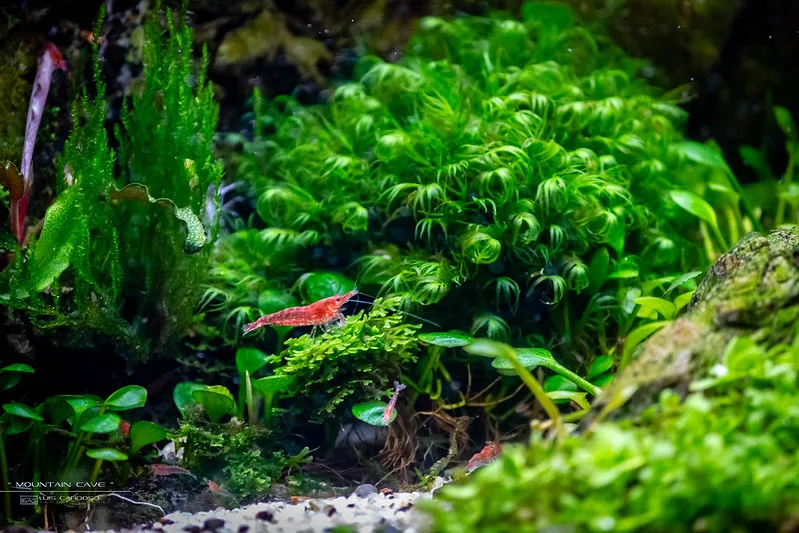
With its unique, feathery appearance, Phoenix Moss is a stunning and less common addition to any aquarium.
- Growth Pattern: Phoenix Moss grows in round, compact tufts with small fronds that resemble feathers. It attaches strongly to surfaces and is a relatively slow grower.
- Best Uses: Ideal for adding fine texture and detail to rocks and driftwood. Its rounded tufts create an interesting contrast with other mosses.
7. Mini Pellia / Coral Moss (Riccardia chamedryfolia)
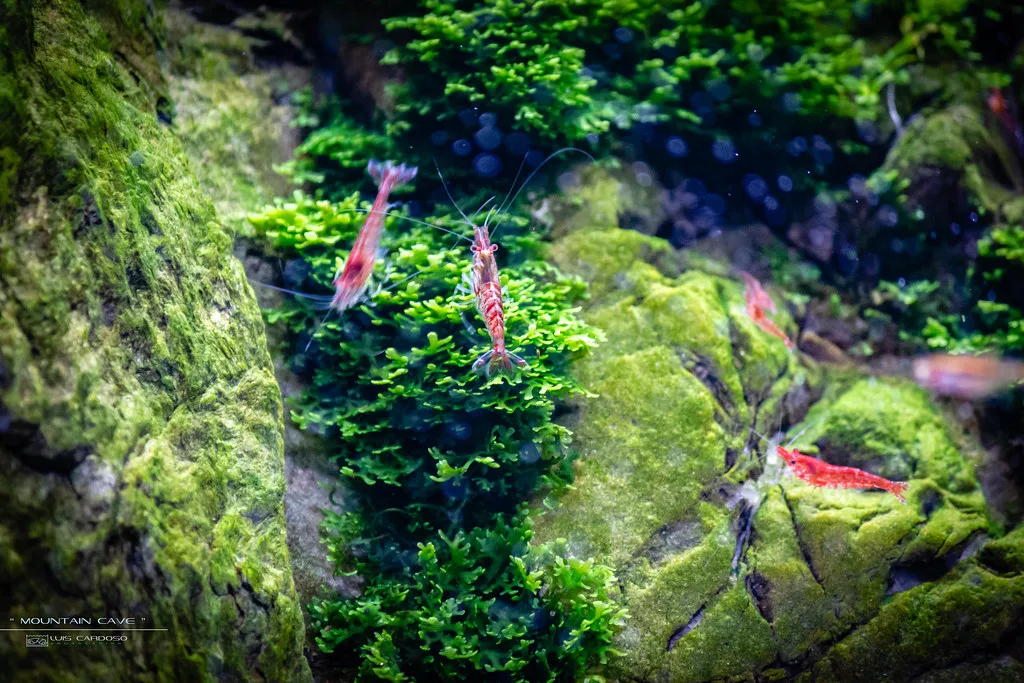
Though often grouped with mosses, Mini Pellia is actually a liverwort, highly sought after for its unique and sophisticated appearance.
- Growth Pattern: Riccardia is a slow grower, forming compact, delicate cushions. Its structure is firm and branching, resembling coral, which earns it the name “Coral Moss.” It adheres well to surfaces but can take time to establish.
- Best Uses: It’s perfect for adding fine details and texture to driftwood and rocks, especially in nano aquariums or for creating a sense of scale in larger layouts. Its intricate look makes it a favorite among advanced aquascapers. It requires stable water conditions and benefits from CO₂ for denser, healthier growth.
Aquarium Moss Care: Tips for Success
Most types of aquarium moss are relatively undemanding, but following a few key care tips will help ensure they thrive and display their full beauty:
- Attachment: Initially attach moss to a surface (driftwood, rock, etc.) using cotton thread, fishing line, or aquarium-safe superglue (cyanoacrylate).
- Lighting: Most mosses thrive in low to moderate lighting. Intense lighting can encourage algae to grow on the moss.
- Fertilizers and CO₂: While not strictly necessary for common mosses, a balanced liquid fertilizer and CO₂ injection can accelerate growth and intensify their vibrant green color.
- Trimming: Trim your moss regularly to maintain its desired shape and prevent the lower layers from dying off due to lack of light.
Mosses are simple organisms, they don’t have special tissues like higher vascular plants for storing nutrients. So if they have to adapt to a new environment, they will need time to do so because of a lack of own resources.
This quote reminds us of the importance of patience when introducing moss to a new aquarium. Give these plants time to acclimate, and you will be rewarded with lush, healthy growth.
Conclusion
Aquarium moss is a fantastic addition to any tank, offering both aesthetic and biological benefits. With such a diversity of shapes, textures, and growth patterns, there is a perfect moss for every aquascaping vision. At Bluviva.com, we encourage you to explore the wonderful world of aquatic mosses and take the next step in creating the aquarium of your dreams.