Your plants looked great the week you planted them. Now some leaves are turning yellow, new growth is small, and a few stems look thin and weak. In most cases, the reason is simple: your plants are hungry. Light and CO2 help plants grow, but plants cannot build healthy leaves without food. That food comes from fertiliser.
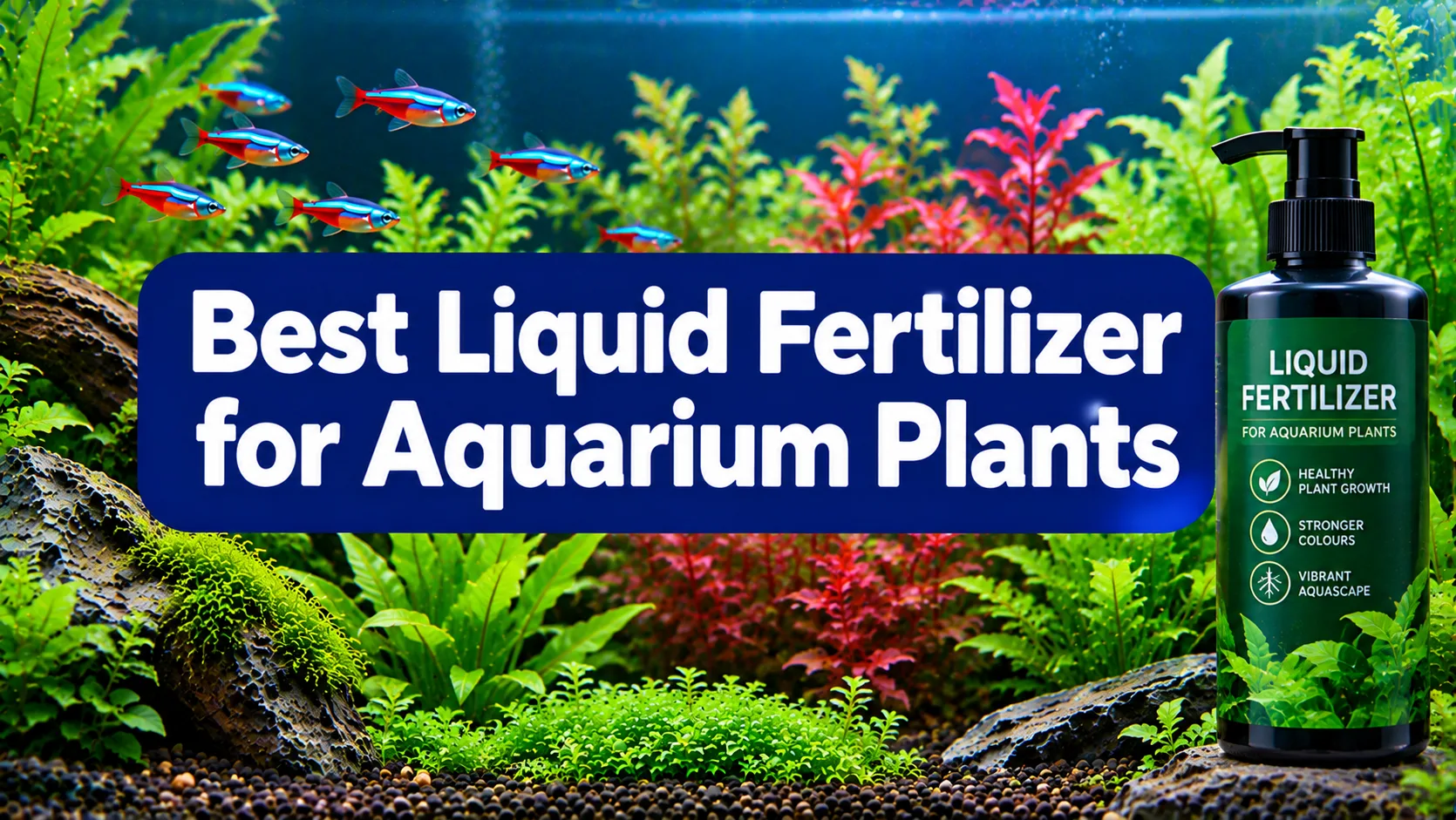
Choosing the best liquid fertilizer for aquarium plants can feel confusing. Some bottles have everything in one. Others hold just one nutrient. Some are made for bright, high-tech tanks, and some are made for a few easy plants in a fish tank. In this blog, we will compare the liquid ranges from 2Hr Aquarist, Seachem Flourish and Tropica. You will learn what each one does, which tank it suits, and how to dose it without causing algae.
Our Top Picks
- Best all-in-one: 2Hr APT 3 Complete
- Best for new soil tanks or tanks with lots of fish: 2Hr APT 1 Zero
- Best for high-tech CO2 tanks: 2Hr APTe EI
- Best for beginners: Tropica Premium Nutrition
- Best for full control: the Seachem Flourish range
- Best liquid carbon: Seachem Flourish Excel
What Does a Liquid Fertiliser Do?
Aquarium plants need the same basic things as garden plants: light, carbon and nutrients. In a tank, some nutrients come from fish waste and leftover food. But this is rarely enough, and it is never balanced. A liquid fertiliser fills the gaps.
Liquid fertiliser mixes into the water. Plants then take it in through their leaves and roots. This makes it perfect for plants that do not root in the substrate, such as Anubias, Java fern, mosses and floating plants. Rooted plants also benefit, even if you use a rich aquasoil.
Most good products are safe for fish, shrimp and snails when you follow the label. Problems usually start when people add too much, too fast.
Macronutrients and Micronutrients
Plants need two groups of nutrients. Healthy growth needs both.
Macronutrients (needed in large amounts):
- Nitrogen (N): builds leaves and stems
- Phosphorus (P): supports roots and gives the plant energy
- Potassium (K): keeps leaves strong. A lack of it often shows as small holes in older leaves
Micronutrients (needed in tiny amounts):
- Iron (Fe): keeps new leaves green and helps red plants show their colour
- Magnesium, manganese, boron, zinc and others: help the plant use light and stay healthy
An all-in-one fertiliser has both groups in one bottle. A separate system gives you one bottle per nutrient, so you can fix one shortage at a time.
How to Choose the Right Fertiliser for Your Tank
Before you buy, ask yourself these five questions:
- Do you inject CO2? High-tech tanks with strong light grow fast and need much more food. Low-tech tanks need far less.
- How many fish do you keep? A busy fish tank already makes lots of nitrate and phosphate. Adding more can feed algae.
- How old is your soil? New aquasoil releases a lot of nitrogen for the first few months.
- How much time do you have? One bottle is easy. Five bottles need testing and planning.
- Do you want simple or precise? Beginners do best with one product. Experienced keepers may enjoy full control.
The Best Liquid Fertilizer for Aquarium Plants: Our 2026 List
1. 2Hr APT 3 Complete – Best All-in-One Fertiliser
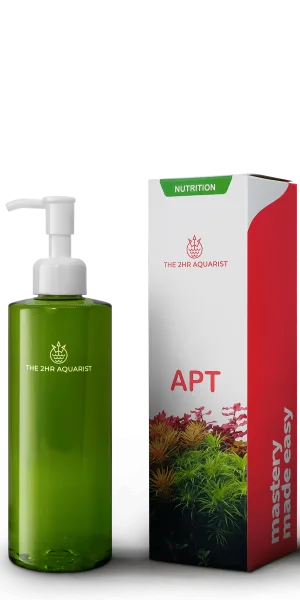
2Hr APT 3 Complete is the one bottle we suggest to most planted tank owners. It holds nitrogen, phosphorus, potassium, iron and trace elements in a balanced mix. It works in both low-tech and CO2 tanks, and it suits tanks with more plants than fish.
The usual dose is 5 ml per 100 litres four times a week, or 3 ml per 100 litres every day. The pump top makes dosing quick and clean. Refill packs help you save money if you have a bigger tank.
- Best for: most planted tanks, from beginner to expert
- Contains: N, P, K, iron and trace elements
- Sizes: 300 ml pump bottle, plus refills up to 1,000 ml
2. 2Hr APT 1 Zero – Best for New Soil Tanks and Busy Fish Tanks
2Hr APT 1 Zero is a complete fertiliser with no added nitrate or phosphate. That sounds odd, but it solves a real problem. Fresh aquasoil leaks plenty of nitrogen for its first few months. Tanks with many fish also make lots of nitrate and phosphate on their own.
In these tanks, extra nitrogen and phosphorus can push algae. APT 1 Zero gives plants the potassium, iron, magnesium and trace elements they still need, without the extras. 2Hr suggests it for the first three months of a new soil tank. After that, many people move on to APT 3.
Dose 3 ml per 100 litres daily, or 5 ml per 100 litres four times a week.
- Best for: new aquasoil tanks and tanks with more fish than plants
- Sizes: 300 ml pump bottle, plus refills from 100 ml to 1,000 ml
3. 2Hr APTe EI – Best for High-Tech CO2 Tanks
2Hr APTe EI is built for strong light, CO2 injection and thick planting. It follows the Estimative Index (EI) method. The idea is simple: give plants more than enough of everything, then reset the water with a big water change each week.
The dose is 5 ml per 100 litres, three to four times a week, with a 50% water change at the end of every week. This is a strong formula. It is not right for low-tech tanks, tanks with only a few plants, or anyone who cannot keep up with large weekly water changes.
- Best for: Dutch-style and competition tanks with high light and CO2
- Sizes: 300 ml bottle, plus refills from 200 ml to 1,000 ml
4. Tropica Premium Nutrition – Best for Beginners and Low-Tech Tanks
Tropica Premium Nutrition is a gentle, simple choice. It contains no nitrogen or phosphorus, because fish waste already supplies those in most community tanks. Instead, it focuses on the micronutrients that easy plants need to stay green.
You add 5 ml per 50 litres once a week, after your water change. The pump bottle measures each dose for you. Tropica also suggests changing at least 25% of the water every two weeks. This makes it ideal for tanks with Anubias, Java fern, Cryptocoryne and other slow growers.
- Best for: beginners, low-tech tanks and tanks with plenty of fish
- Sizes: 125 ml, 300 ml and 750 ml
5. Tropica Specialised Nutrition – Best for Hungry Plants in Lightly Stocked Tanks
Tropica Specialised Nutrition is Premium’s bigger brother. It adds nitrogen and phosphorus to the micronutrients, so it is a complete fertiliser. Choose it when your plants grow faster, you keep only a few fish, or your plants show signs of hunger.
The dose is also 5 ml per 50 litres each week. Because it contains nitrogen and phosphorus, keep an eye out for algae. Tropica’s advice is clear: if algae appears, cut the dose by half and change the water more often.
- Best for: faster-growing plants and tanks with few fish
- Sizes: 125 ml, 300 ml and 750 ml
6. Seachem Flourish – Best Trace Element Booster
Seachem Flourish (often called Flourish Comprehensive) is one of the best-known plant products in the hobby. It is packed with micronutrients and trace elements, including iron, magnesium and calcium. It is also safe for shrimp.
Flourish is not a full NPK fertiliser. Seachem keeps the main nutrients in separate bottles on purpose. This means you never overdose trace elements just to raise nitrogen or potassium. On its own, Flourish suits low-tech tanks with plenty of fish. The usual dose is 5 ml per 250 litres once or twice a week.
- Best for: a base routine in low-tech tanks, or as part of a custom system
- Sizes: 100 ml, 250 ml and 500 ml
7. Seachem Flourish Nitrogen, Phosphorus and Potassium – Best for Custom Dosing
Flourish Nitrogen, Flourish Phosphorus and Flourish Potassium let you build your own routine. Each bottle adds a single macronutrient. You use a test kit, find what is low, and add only that.
This takes more effort, but it gives you full control. It is a great next step once you understand your tank. Potassium is often the first nutrient to run short in planted tanks, so it is a popular first extra. Always test before you dose, and follow the label.
8. Seachem Flourish Iron – Best for Red Plants
Iron keeps new leaves green and helps red plants such as Rotala and Ludwigia show deeper colour. When new leaves come in pale or yellow while the veins stay green, iron is often low.
Seachem Flourish Iron adds iron that plants can use easily, without any other nutrients. Pair it with Flourish or an all-in-one if your red plants look dull. Do not overdo it. More iron does not always mean more red, and strong light plays a big part too.
9. Seachem Flourish Excel – Best Liquid Carbon
Seachem Flourish Excel is not a fertiliser in the normal sense. It is a liquid carbon source. All plants need carbon, and in tanks without CO2 injection, carbon is often what holds growth back. Excel gives low-tech tanks a useful boost.
The label dose is 5 ml per 40 litres on first use or after a water change of more than 40%. After that, use 5 ml per 200 litres daily or every other day. Take care with Vallisneria and some mosses, as they can melt when exposed to Excel. Start low, or skip it if you keep these plants.
10. Seachem Flourish Advance – Best Growth Booster
Seachem Flourish Advance is a growth booster made with natural plant hormones, minerals and nutrients. It aims to speed up both root and shoot growth. Seachem says you should see more root growth in the first 10 to 14 days, followed by faster leaf and stem growth.
Think of Advance as an extra, not a main fertiliser. It works best alongside a full nutrient routine. It is handy for new tanks, freshly trimmed plants, or slow growers that need a push.
How to Dose Liquid Fertiliser the Right Way
Even the best product can cause trouble if you dose it badly. Follow these simple rules:
- Start with half the label dose. Raise it slowly over two to three weeks.
- Dose after your water change. Otherwise you throw fresh fertiliser away.
- Match food to light. Strong light with too little food causes algae. Too much food with weak light does the same.
- Keep a steady routine. Plants prefer small, regular doses to big, rare ones.
- Change water every week. Changing 25 to 50% resets the balance and removes extra nutrients.
- Never mix two all-in-one fertilisers. You will double the trace elements.
Signs Your Plants Need More (or Less) Fertiliser
Your plants will tell you what they need. Use this table as a quick guide.
| What you see | What it often means | What to try |
|---|---|---|
| Old leaves turn yellow | Low nitrogen | A complete fertiliser such as APT 3 or Tropica Specialised |
| Small holes in older leaves | Low potassium | Flourish Potassium or an all-in-one |
| Pale new leaves with green veins | Low iron | Flourish Iron or Seachem Flourish |
| Red plants look green or brown | Low iron or weak light | Add iron and check your light |
| Green dust or hair algae | Too much light or food, or poor balance | Lower the dose, shorten the light period, change more water |
| Plants stop growing | Low carbon or nutrients | Try Flourish Excel and check your dosing |
Remember, leaves that are already damaged will not heal. Judge any change by the new growth.
Side-by-Side Comparison
| Product | Type | Adds N and P? | Best for | Label dose | Sizes |
|---|---|---|---|---|---|
| 2Hr APT 3 Complete | All-in-one | Yes | Most planted tanks | 5 ml per 100 L, 4 times a week | 300 ml + refills |
| 2Hr APT 1 Zero | All-in-one | No | New soil, many fish | 3 ml per 100 L daily | 300 ml + refills |
| 2Hr APTe EI | High-strength all-in-one | Yes | High light and CO2 | 5 ml per 100 L, 3–4 times a week + 50% weekly change | 300 ml + refills |
| Tropica Premium Nutrition | Micronutrients | No | Beginners, low-tech | 5 ml per 50 L weekly | 125 / 300 / 750 ml |
| Tropica Specialised Nutrition | Complete | Yes | Faster growers, few fish | 5 ml per 50 L weekly | 125 / 300 / 750 ml |
| Seachem Flourish | Micronutrients | No | Base routine | 5 ml per 250 L, 1–2 times a week | 100 / 250 / 500 ml |
| Flourish N, P and K | Single macronutrient | One each | Custom dosing | Dose by test result | 2 sizes each |
| Seachem Flourish Iron | Iron only | No | Red plants | Follow label | 2 sizes |
| Seachem Flourish Excel | Liquid carbon | No | Low-tech tanks without CO2 | 5 ml per 200 L daily | 2 sizes |
| Seachem Flourish Advance | Growth booster | No | Roots, new tanks | Follow label | 250 / 500 ml |
Frequently Asked Questions
What is the best liquid fertilizer for aquarium plants for beginners?
For most beginners, 2Hr APT 3 Complete is the easiest choice. One bottle covers every nutrient, and the pump top makes dosing simple. If your tank is full of fish or uses easy, slow-growing plants, Tropica Premium Nutrition is an even gentler start, with just one dose a week.
Is liquid fertiliser safe for shrimp?
Yes, when you follow the label. The 2Hr, Tropica and Seachem products in this guide are made for tanks with fish and invertebrates. Shrimp are more sensitive than fish, so start with half the dose and raise it slowly. Always avoid overdosing.
Do I need liquid fertiliser if I use aquasoil?
Usually, yes. Aquasoil feeds plants through their roots, but many plants take food from the water through their leaves. Mosses, Anubias and Java fern do not root in the soil at all. For a new soil tank, a fertiliser with no nitrate or phosphate, such as APT 1 Zero, works well for the first few months.
Can I use liquid fertiliser without CO2?
Yes. Most low-tech tanks do well with a light, regular dose. Plants grow more slowly without CO2, so they need less food. Use a gentle product such as Tropica Premium Nutrition or a reduced dose of APT 3 Complete. You can also add Flourish Excel for extra carbon.
Why do I get algae after adding fertiliser?
Algae grows when nutrients, light and carbon are out of balance. Too much fertiliser, too much light or not enough plants can all trigger it. Cut your dose by half, shorten your light period, and do a larger water change. Adding fast-growing plants also helps them beat the algae to the food.
Conclusion
There is no single best liquid fertilizer for aquarium plants that suits every tank. The right choice depends on your light, your fish, your soil and how much time you want to spend. For most people, 2Hr APT 3 Complete is the easiest way to get strong, healthy growth from one bottle. If your tank is new or packed with fish, start with APT 1 Zero. If you run CO2 and bright light, APTe EI will keep up with your plants.
For a gentle, low-effort routine, Tropica Premium Nutrition is hard to beat. And if you enjoy testing and fine-tuning, the Seachem Flourish range lets you feed your plants one nutrient at a time. Whatever you choose, start low, dose steadily and watch the new leaves. Your plants will show you when you have got it right. You can browse the full range of liquid fertilisers at Bluviva to find the right bottle for your tank.