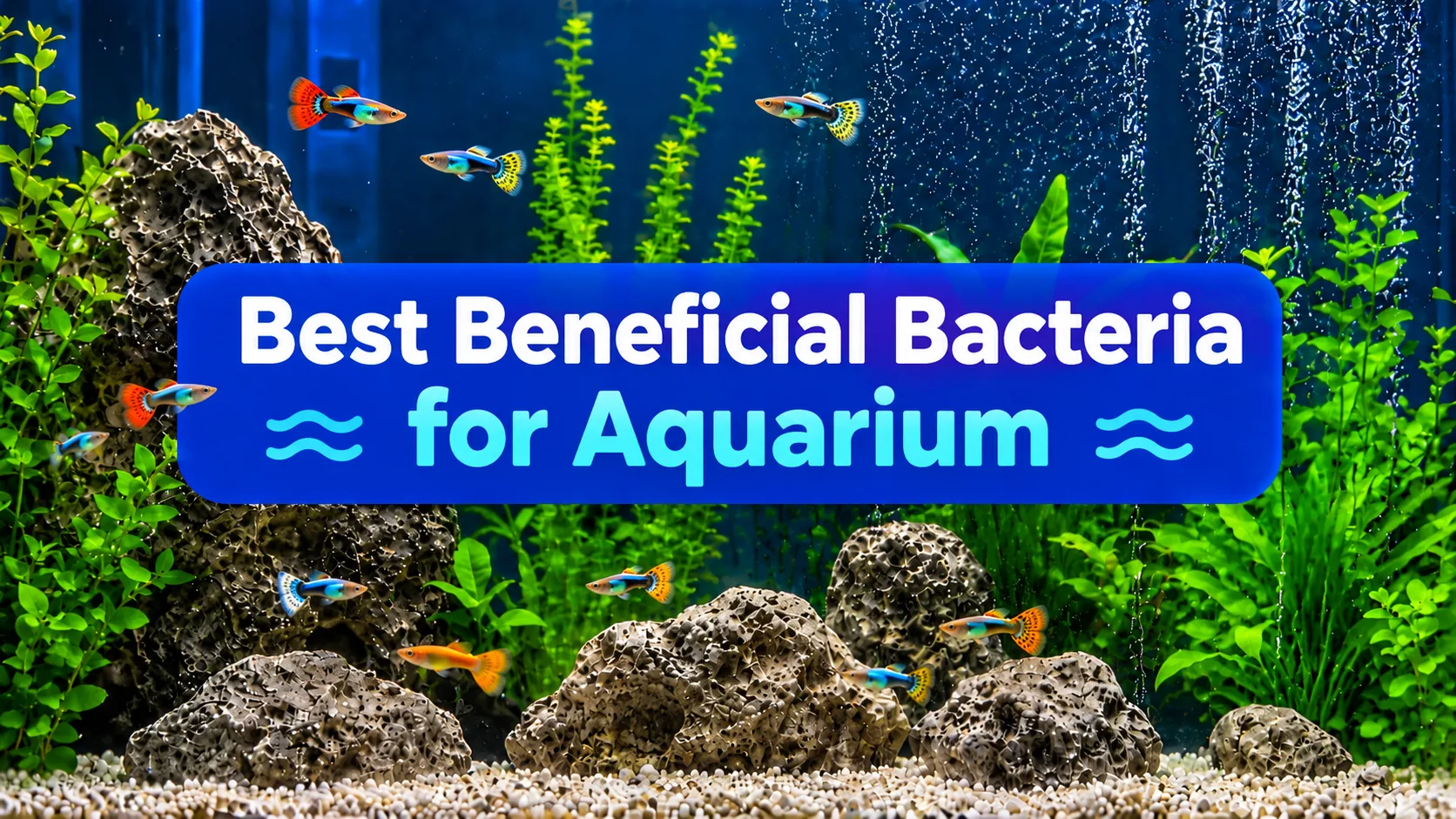
If you have ever lost fish in a brand new tank, you already know how much the tiny things matter. Clean-looking water can still be full of ammonia, and you cannot see it with your eyes. The thing that keeps your fish safe is not the filter box or the light. It is the living bacteria that grow inside your filter, your gravel and on every rock and piece of wood in the tank.
I have set up a lot of aquariums over the years, from small shrimp tanks to large planted layouts. The one lesson that never changes is this: you cannot rush good water, but you can help it along. A good bottle of beneficial bacteria gives your tank a head start and keeps it steady when things go wrong, like after a big clean, a new group of fish or a dose of medicine.
In this guide, I will explain what these bacteria do in plain words. Then I will walk you through the best beneficial bacteria for aquarium use that you can buy at Bluviva, what each one is best at, and how to use them the right way.
What Beneficial Bacteria Do in Your Tank
Every fish makes waste, and every bit of uneaten food starts to rot. Both of these turn into ammonia, which burns fish gills and can kill them fast. In a river or lake, the water is so big that the waste gets spread out. In a glass box with a few dozen litres of water, it builds up quickly. This is why a tank needs a living clean-up crew.
That crew works in three simple steps, which together are called the nitrogen cycle:
- Fish waste and old food break down into ammonia, which is very toxic.
- One group of bacteria eats the ammonia and turns it into nitrite, which is still toxic.
- A second group of bacteria eats the nitrite and turns it into nitrate, which is much safer. You remove nitrate with water changes, and plants also use it as food.
A new tank has almost none of these bacteria. It can take weeks for them to grow on their own, and during that time ammonia and nitrite can rise to dangerous levels. Fishkeepers call this ”new tank syndrome”, and it is the most common reason beginners lose fish. A bottled bacteria product adds a large number of these helpful microbes on day one, so the cycle starts sooner and runs more smoothly.
You can learn more about how this cycle shows up as murky water in our guide to cloudy aquarium water.
Not All Bacteria Bottles Do the Same Job
When people search for the best beneficial bacteria, they often think there is one magic bottle. In truth, there are a few kinds of products, and each one is made for a different job. Picking the right type matters more than picking the most famous brand.
- Nitrifying starters hold the bacteria that turn ammonia into nitrite and then nitrate. These are the ones you want for a brand new tank.
- Waste digesters hold bacteria that break down sludge, old food, plant bits and fish droppings. They help keep gravel clean and water clear.
- All-in-one blends mix both kinds, so they help with cycling and with general cleaning at the same time.
Most tanks do best with one main product used often, plus a second one only when there is a clear problem, like dirty sand or cloudy water. Now let’s look at the products themselves.
The 7 Best Beneficial Bacteria for Aquariums at Bluviva
1. Microbe-Lift Special Blend: Best All-Round Choice
Best for: daily care of almost any tank, freshwater or saltwater.
If I could only keep one bottle on my shelf, it would be Microbe-Lift Special Blend. It is a mix of many kinds of bacteria, so it lowers ammonia and nitrite and also eats the sludge that builds up on gravel, plants and decor. Over time it helps keep water clear and stops that swampy smell some tanks get. It is also one of the products in our own Luís Cardoso’s Essentials range, which tells you how much we trust it in planted tanks.
The bottles last a long time. The 118 ml size treats a tank of about 114 litres for up to 16 weeks, and the 251 ml size treats about 246 litres for up to 32 weeks. Two tips from experience: turn off any UV steriliser for 48 to 72 hours after dosing so it does not kill the new bacteria, and remember it does not remove chlorine, so you still need a water conditioner for tap water.
2. Microbe-Lift Nite-Out II: Best for Cycling a New Tank
Best for: brand new setups and adding new fish.
Microbe-Lift Nite-Out II is a pure nitrifying starter. It holds the exact bacteria that do the hard work of the nitrogen cycle, Nitrosomonas, Nitrospira and Nitrobacter. This makes it the most direct choice when you are starting a tank from zero and want ammonia and nitrite to drop as soon as possible. It also works in cooler water, which is handy for coldwater fish and ponds.
The dose is simple. In a new tank, add 5 ml for every 40 litres every other day until your tests show safe ammonia and nitrite. After that, use the same amount during water changes or when you add new fish. Keep the bottle in the fridge at 4 to 7°C once it is open, and make sure your tank has good water movement, because these bacteria need oxygen. Many keepers pair it with Special Blend for the best of both.
3. Seachem Stability: Best for Beginners
Best for: first-time fishkeepers and tanks with a lot of waste.
Seachem Stability is the bottle I recommend most to new hobbyists, because it is very hard to get wrong. It holds a blend of bacteria that live with oxygen, without oxygen, and in between, so they can break down ammonia, nitrite, nitrate and other waste in many kinds of water. Seachem says it is harmless to fish and plants, with no risk of overdose.
Another plus is that its bacteria do not make hydrogen sulphide, the gas that smells like rotten eggs. It is also made to keep working when the tank is under stress or has a heavy waste load, which is when weaker products can fail. It comes in 250 ml and 500 ml bottles and works in both freshwater and marine tanks.
4. Microbe-Lift TheraP: Best for Fish Health
Best for: busy tanks with lots of fish and fish that seem stressed.
Microbe-Lift TheraP does the normal bacteria jobs, like handling ammonia and nitrite and digesting fish waste. What makes it different is the focus on the fish themselves. It is made to support their natural defences, lower stress and help keep a calm, healthy setting for breeding and growth.
This makes it a sensible choice when your tank holds more fish than average, or when you are bringing fish back to good health after a hard time. It works in fresh and salt water and over a wide range of pH. If you use it with another Microbe-Lift product, the maker says to cut the dose of the second product by half. A light sulphur smell when you open the bottle is normal and fades fast.
5. Seachem Remediation: Best for Sludge and Surface Film
Best for: older tanks with built-up muck, oily film or cloudy water.
Seachem Remediation, sold under the aquavitro name, is a waste digester first. Its bacteria break down extra food, sludge and detritus, and they can even eat the fats that cause that ugly film on the water surface. As they grow, they make sticky natural compounds that trap tiny floating bits, so the water gets clearer.
The big strength here is toughness. Unlike normal nitrifying bacteria, this blend can keep working in places with little oxygen, like deep in the sand or in a clogged filter. It also helps cut extra nutrients such as ammonia, nitrate and phosphate that feed algae. It comes in 150 ml and 350 ml sizes for fresh and salt water.
6. Microbe-Lift Substrate Cleaner: Best for Dirty Gravel
Best for: gravel and sand that look dark, dirty or smelly.
Microbe-Lift Substrate Cleaner goes after the muck that settles in the bottom of the tank. It mixes special microbes with natural boosters, so it breaks down sludge with very little digging or stirring. It also helps bind phosphate, which is a common cause of algae.
To use it, add 20 ml for every 100 litres every two weeks until the bottom is clean, then 20 ml per 100 litres once a month to keep it that way. Do not panic if the water turns a little dark or slightly cloudy at first. The liquid is black, and any haze should clear in about 24 to 72 hours. Switch off UV lights for 12 to 24 hours after each dose.
7. Azoo Ultra Bioguard Plus: Best for Shrimp and Planted Tanks
Best for: shrimp tanks, planted tanks and starting dry filter media.
Azoo Ultra Bioguard Plus mixes bacteria with natural probiotics such as Bacillus and Lactobacillus. These break down ammonia, nitrite and organic waste in the filter and substrate. A neat feature is that you can pour it straight onto dry filter media or gravel before you fill the tank, and the bacteria wake up as soon as they get wet.
Shrimp keepers like it for one more reason. The tiny probiotic particles can act as a first food for baby shrimp and young fish, and they may help with digestion. It comes in 120 ml and 250 ml bottles and is made for both freshwater and saltwater setups.
How to Pick the Right Bacteria for Your Tank
The easiest way to choose is to start with your problem, not the product. A brand new tank needs a nitrifying starter, like Nite-Out II or Stability. A tank that is already running but looks dirty needs a waste digester, like Remediation or Substrate Cleaner. A healthy tank that you just want to keep steady does well with a blend such as Special Blend used on a regular schedule.
How to Add Bacteria the Right Way
Bottled bacteria are alive, so how you use them matters just as much as which one you buy. Follow these steps for the best results:
- Treat tap water first. Chlorine and chloramine kill bacteria. Add a dechlorinator before or at the same time as your bacteria.
- Shake the bottle well. The bacteria settle at the bottom, and you want them in every drop you pour.
- Dose near the filter. Pour it where the water flows into the filter, since that is where most of the bacteria will settle and grow.
- Turn off UV for a while. A UV steriliser can kill free-floating bacteria, so switch it off for the time the label says.
- Test your water. A test kit shows when ammonia and nitrite reach zero, which is the only real sign the tank is ready.
- Add fish slowly. Even with bottled bacteria, add a few fish at a time so the bacteria can keep up with the extra waste.
A cycled tank should show 0 ppm ammonia, 0 ppm nitrite and some nitrate for about a week in a row. Once you see that, your filter is doing its job.
Mistakes That Kill Good Bacteria
I see the same few mistakes again and again, and most of them undo all the good work the bottle was meant to do. The biggest one is washing filter sponges under the tap. Tap water kills the bacteria living in the sponge, which can restart your cycle overnight. Always rinse filter parts in a bucket of old tank water instead.
Another common mistake is cleaning everything at once. If you deep clean the gravel, change the filter media and do a huge water change on the same day, you remove most of your bacteria in one go. Spread big jobs out over a couple of weeks. Also be careful with medicines, since some of them harm good bacteria along with the bad. After a treatment, a fresh dose of bacteria helps the tank recover.
Finally, do not expect a bottle to fix overfeeding or too many fish. Bacteria can only handle so much waste. Feed small amounts your fish finish in a couple of minutes, and keep your stocking sensible, and the bacteria will do the rest.
A Quick Comparison
| Product | Best for | Main job | Water type | Sizes at Bluviva |
|---|---|---|---|---|
| Microbe-Lift Special Blend | All-round care | Cycling and sludge control | Fresh and salt | 118 ml, 251 ml, 473 ml, 3.79 L |
| Microbe-Lift Nite-Out II | New tanks | Nitrifying starter | Fresh and salt | 118 ml, 251 ml, 473 ml, 3.79 L |
| Seachem Stability | Beginners | Builds the biofilter | Fresh and salt | 250 ml, 500 ml |
| Microbe-Lift TheraP | Fish health | Waste control and less stress | Fresh and salt | 118 ml, 251 ml, 473 ml, 3.79 L |
| Seachem Remediation | Sludge and surface film | Waste digester | Fresh and salt | 150 ml, 350 ml |
| Microbe-Lift Substrate Cleaner | Dirty gravel | Breaks down bottom muck | Fresh and salt | 118 ml, 251 ml, 473 ml, 3.79 L |
| Azoo Ultra Bioguard Plus | Shrimp and planted tanks | Bacteria plus probiotics | Fresh and salt | 120 ml, 250 ml |
Frequently Asked Questions
What is the best beneficial bacteria for a new aquarium?
For a new tank, pick a nitrifying starter. Microbe-Lift Nite-Out II holds the main bacteria that turn ammonia into nitrite and then nitrate, so it gets the cycle going fast. Seachem Stability is a great choice if you are a beginner and want a product that is very hard to overdose. Either way, keep testing your water and add fish slowly.
Can I add fish on the same day as bacteria?
Some products say you can, but I advise patience. Bottled bacteria give you a strong head start, yet they still need time and food to settle into the filter. The safest plan is to add a small group of hardy fish first, test the water every day or two, and only add more fish once ammonia and nitrite stay at zero.
Can you add too much beneficial bacteria?
In most cases, extra bacteria will not hurt your fish. The most common side effect is a short spell of cloudy water that clears on its own. Still, it is best to follow the label. Products like Seachem Stability are made to be safe even if you add more, but there is no gain in wasting a bottle.
How often should I add bacteria to my tank?
In a new tank, dose often in the first few weeks, following the label. In a settled tank, a regular dose during water changes is usually enough. Add an extra dose after you clean the filter, use medicine, or add a lot of new fish, since these are the times your bacteria are under the most stress.
Can I use two bacteria products together?
Yes, many keepers do. A common pairing is Nite-Out II for cycling with Special Blend for waste control. If you mix two Microbe-Lift products, the maker advises cutting the dose of the second one by half. Add them at the same time and let your filter do the rest.
Final Thoughts
The best beneficial bacteria for your aquarium is the one that matches the job in front of you. For most people, Microbe-Lift Special Blend is the best all-round bottle, Nite-Out II or Seachem Stability are the best for a new tank, and Remediation or Substrate Cleaner are the ones to grab when the bottom of the tank gets messy. Shrimp keepers will get a lot out of Azoo Ultra Bioguard Plus.
Whatever you choose, treat your bacteria like the living team they are. Remove chlorine, keep the water moving, test often and never wash your filter under the tap. Do that, and your fish will thank you with bright colours and long, healthy lives. You can find every product in this guide in our bacteria cultures collection.